
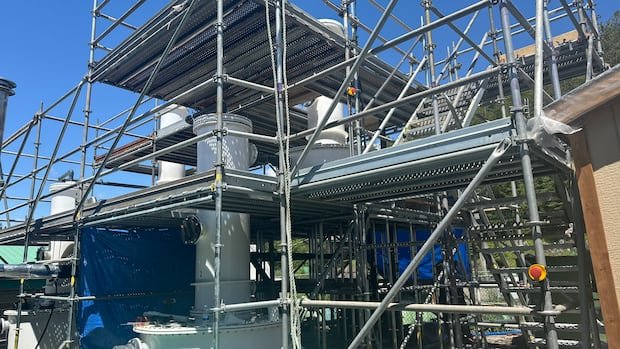
A startup in Nova Scotia is conducting trials on a technique to capture and retain more carbon in the ocean, using a new experimental facility to validate the idea. The ocean has been a significant reservoir for excess carbon dioxide, absorbing around 30% of human-induced carbon emissions since the 1980s.
pHathom, the company behind this initiative, is striving to extract additional emissions from the atmosphere by capturing carbon dioxide and transforming it into a form that can be securely stored in the ocean for thousands of years. The testing of their methodology will take place at the Huntsman Marine Science Centre in St. Andrews, N.B.
Kimberly Gilbert, the co-founder and CEO, emphasized that demonstrating the safety and effectiveness of their approach through the pilot phase is crucial. The company’s technique replicates a natural process where raindrops absorb carbon dioxide from the air as they fall and interact with alkaline rocks like limestone, converting the carbon dioxide into bicarbonate.
By exposing seawater to the emissions from a biomass power plant in a controlled reactor, the method makes the water more acidic. The acidic water is then combined with small limestone particles, converting the carbon dioxide into bicarbonate before being reintroduced into the ocean with the same pH level as regular seawater.
Other firms in Nova Scotia are also exploring variations of carbon removal techniques, known as alkalinity enhancement. pHathom’s approach stands out for its use of highly concentrated carbon dioxide, enhancing efficiency. The pilot project aims to capture 0.1 tonnes of carbon dioxide daily, with the process generating treated water for testing tanks to observe its impact on various marine species over a three-month period.
If successful, pHathom plans to expand its operations with another test site in Nova Scotia next year, integrating the reactor into a building transitioning from a fossil-fuel boiler to a biomass system. Despite hurdles related to energy consumption and scalability, the company remains optimistic about the potential impact of their technology in tackling the climate crisis.
The Canadian Senate report recently highlighted Canada as a leader in ocean alkalinity enhancement research, recommending government leadership in global implementation and regulation frameworks. Despite challenges in domestic climate policies, there is confidence that economic and environmental imperatives will drive global action when the time is right.

