
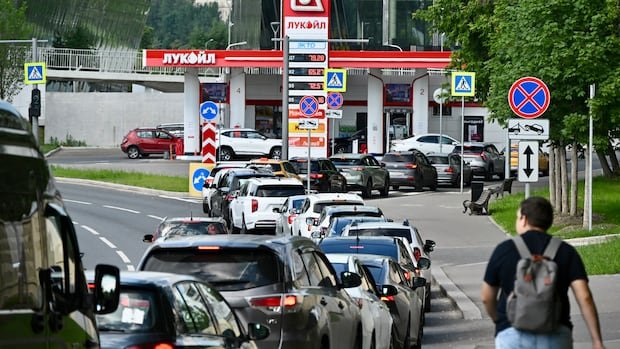
The past weekend saw a surge in videos circulating on social media depicting lengthy queues at Russian gas stations, with reports of altercations between frustrated drivers in parking lots. In response to the public anxiety caused by the shortages resulting from ongoing Ukrainian strikes, President Vladimir Putin sought to reassure the populace on Sunday, downplaying the severity of the situation.
Nonetheless, the measures being implemented by the Russian government indicate the gravity of the crisis. The authorities have already imposed a ban on the export of gasoline and aviation fuel, and the Kremlin announced plans to explore the possibility of importing oil products from other nations. Kremlin spokesperson Dmitry Peskov emphasized the potential importation of fuel, citing the importance of reaching favorable agreements to stabilize the market.
The move by Russia, which was the third-largest oil exporter globally in 2025, to consider procuring refined products from overseas, a strategy rarely employed, underscores the impact of the sustained strikes by Ukraine on the country’s refining capabilities over the past weeks.
Over the last three months, Ukraine has conducted numerous attacks on Russian refineries, including striking a facility near Moscow, resulting in explosions reverberating through the city and a thick plume of smoke engulfing the skyline. The International Energy Agency characterized the disruption as unprecedented in the history of the conflict, noting that Russia’s oil production in May fell 10% below its monthly target. Additionally, industry sources disclosed that gasoline output has decreased by approximately 25% compared to the daily average in June last year.
The fuel shortages have led to restrictions, closures of gas stations, and extensive queues at pump stations, exacerbating public frustration. The ripple effects of the conflict continue to unfold, with various regions imposing restrictions on fuel purchases. In Crimea, where Russia’s annexation in 2014 is deemed illegal, a state of emergency has been declared due to the gasoline scarcity.
Numerous motorists have reported challenges in obtaining fuel, with some stations abruptly halting refueling operations, prompting suspicions of intentional supply constraints to inflate prices. Amidst the crisis, a wave of social media posts has emerged, including memes referencing a statement by the late U.S. Senator John McCain in 2014, suggesting that Russia, previously likened to a “gas station,” is now facing fuel shortages.
Russian officials have refrained from disclosing details of negotiations with potential fuel suppliers, although reports indicate considerations for temporary production of lower-quality fuel and permitting imports of substandard products. Moreover, efforts to educate drivers on the benefits of not always refilling fuel tanks to capacity have surfaced in Russian online publications.
The fuel crisis poses economic challenges for Russia, with analysts warning of potential impacts on an already fragile economy. The scarcity of fuel, coupled with existing budget deficits, may hinder further interest rate cuts by the central bank. Economic experts suggest that the gasoline crisis could serve as a catalyst for broader economic downturn if not addressed promptly.
As efforts are made to address the fuel shortage and fortify refineries against potential future attacks, tensions persist between Ukraine and Russia, with the former engaging in operations to influence the latter to end the ongoing conflict. The evolving situation underscores the multifaceted implications of the fuel crisis and the broader economic ramifications for Russia.

