
A recently formed island has been discovered in the largest lake in British Columbia. B.C. Hydro announced on Monday that the wooded landmass, larger than a Canadian football field, came ashore after drifting about 30 kilometers northwest of its previous location in the middle of Williston Reservoir.
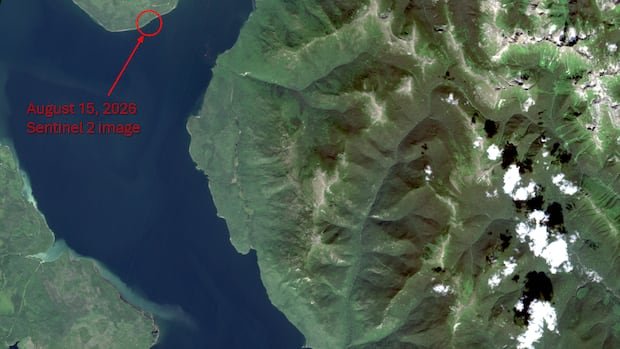
The island’s intriguing appearance and sudden disappearance in the vast man-made lake in northern B.C. have attracted global attention and fascination since boaters first spotted it in August. According to B.C. Hydro spokesperson Bob Gammer, satellite images from August 15 show the island situated in the north entrance of the Ospika Arm, near where the Ospika River meets the reservoir.
Although the island’s origin remains unconfirmed, B.C. Hydro believes that record-high water levels likely caused it to break off from the reservoir’s extensive shoreline. Gammer noted that strong winds would have propelled the island through the open waters over the past month.
With an estimated width of 70 meters and length of 140 meters, the island covers an area of approximately 9,800 square meters. Experts suggest that decades of erosion along the reservoir’s banks have made them susceptible to landslides due to strong winds generating waves and currents that erode shallow-rooted trees along the shore.
B.C. Hydro plans to investigate further to determine the island’s source and formation. The island’s unexpected movements have captivated residents in northern B.C. and international onlookers alike. The island’s whereabouts have puzzled many, with video footage of the floating forest circulating online and sparking widespread interest.
B.C. Hydro has located the island after verifying new reports of its position. Gammer warned that the island is unstable and could potentially shift again if strong winds dislodge it from the shore. Boaters are advised to be cautious and avoid attempting to climb onto the island due to its unstable nature.
As the island continues to intrigue observers, B.C. Hydro remains vigilant in monitoring its movements and potential impact on the surrounding environment.

