
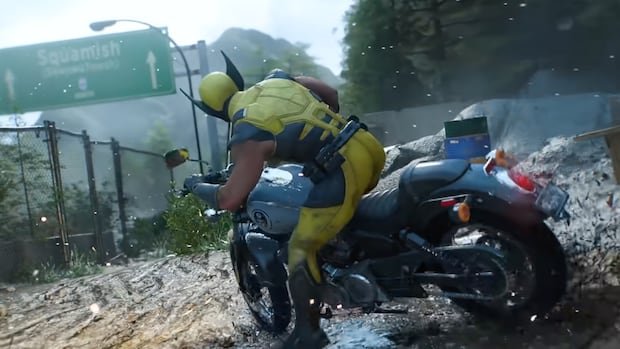
A new Wolverine video game set to attract a vast global audience features signage in the language of the Squamish Nation. Scheduled for release on September 15 on PlayStation 5, the game titled “Marvel’s Wolverine” showcases various locations in British Columbia, such as North Vancouver, the Lions Gate Bridge, and the Sea-to-Sky Highway. In a scene where the protagonist, Logan (also known as Wolverine), rides a motorcycle along the highway, two signs display the words for Whistler (Sk̲wik̲w) and Squamish (Sḵwx̱wú7mesh) in the Sḵwx̱wú7mesh sníchim (Squamish language).
Gavin Goulden, the senior art director based in Vancouver, emphasized the importance of accurately portraying Canadian elements in the game, given that Wolverine’s character originates from Alberta. Describing Wolverine as a prominent Canadian superhero, Goulden highlighted the significance of incorporating real Canadian settings into the game.
The inclusion of the Squamish Nation’s language in the game is considered a notable achievement by gaming experts, as British Columbia is rarely featured in video games. Wilson Williams, the chairperson of Sḵwx̱wú7mesh Úxwumixw (Squamish Nation), expressed pride in seeing their language showcased prominently in the game, emphasizing that it signifies the living presence of their culture in today’s world.
Cary Brisebois, a veteran video game developer and member of the game development advisory board at Vancouver Film School, commended the subtle yet significant gesture of Indigenous inclusion in the game. He appreciated the game’s acknowledgment of Indigenous heritage and land without tokenizing it.
Sarah Christina Ganzon, an assistant professor at Simon Fraser University specializing in game studies, lauded the representation of Canada in the game and the portrayal of Logan in his Canadian homeland. The inclusion of Canadian elements in the game was described as a refreshing departure from the norm.
Aliki Marinakis, an Indigenous language programs manager at the University of Victoria, praised the depiction of the Squamish language in the game as a positive step towards Indigenous representation in pop culture. Highlighting the diversity of Indigenous languages in British Columbia, Marinakis emphasized the importance of showcasing Indigenous cultures in mainstream media.
Nikki Johnston from Tourism Squamish noted the popularity of the Sea-to-Sky region for filming due to its picturesque landscape, indicating that the game’s depiction of the area could boost its exposure as a filming destination. While previous Marvel games have enjoyed immense global success, the impact of “Marvel’s Wolverine” on Squamish’s visibility remains to be seen.

