
A recently released report from the Parliamentary Budget Office indicates that the proposed high-speed rail project connecting Toronto and Quebec City could carry a price tag ranging from $75 billion to $113 billion. This estimation surpasses some of the original official forecasts for the project.
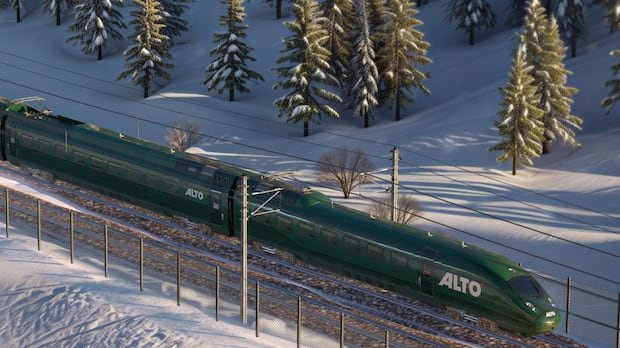
The federal budget watchdog responded to a request from the Senate finance committee by issuing the report, which aims to assign a cost to the government’s contentious Alto high-speed rail corridor. This corridor is designed to enable swift travel between Toronto and Montreal in approximately three hours. Alto, the Crown corporation overseeing this significant infrastructure initiative, is also considering including a potential stop in Kingston, Ontario.
Analyzing international construction practices and the presumed features of the proposed Canadian route, the Parliamentary Budget Office stated that the baseline route’s construction costs, excluding Kingston, could fall within the range of approximately $75 billion to $113 billion. The report highlighted the substantial uncertainty inherent in large-scale rail infrastructure projects.
These estimated costs could exceed the official projections of $60 billion to $90 billion. The primary factors driving the expenses are the tunnels and elevated structures integrated into the project. The budget watchdog disclosed that international evidence suggests each additional kilometer of tunnel would contribute $169 million to the total project cost, while each extra kilometer of elevated structures would add $153 million.
The report noted that including a stop in Kingston could heighten uncertainty due to a balance of factors, such as easier construction geography but a denser population and greater ecological sensitivity in the area.
The Parliamentary Budget Office anticipates that the construction, slated to commence in 2030, would offer a modest economic boost. The report projected that building the Ottawa-Montreal segment would increase real GDP by roughly $1.8 billion in 2029, escalating to $2 billion by 2033, with employment gains rising from about 4,300 to 9,000 jobs.
The analysis by the office drew on high-speed rail projects in Europe, the U.K., and the U.S., highlighting the challenges faced by the latter two countries, including higher construction costs due to land acquisition difficulties, permitting issues, legal disputes, design alterations, and project management deficiencies.
The report also mentioned recent federal legislation, such as the One Canadian Economy Act (Bill C-5), aimed at simplifying approvals, which may reduce risks in Canada associated with such projects. Transport Minister Steve MacKinnon defended the initiative as a means to bolster the economy and create new prospects for Canadians.
In contrast, Conservative transport critic Dan Albas called for the project’s cancellation, expressing concerns about potential delays, cost overruns, and impacts on farmland in Ontario and Quebec. The Bloc Québécois has also raised issues regarding expropriations and consultations for the project. Additionally, opposition from residents in eastern Ontario living along the proposed rail route has been evident.
Overall, the high-speed rail project has triggered a mix of support and skepticism, with various stakeholders expressing divergent views on its feasibility, economic impact, and environmental consequences.

