
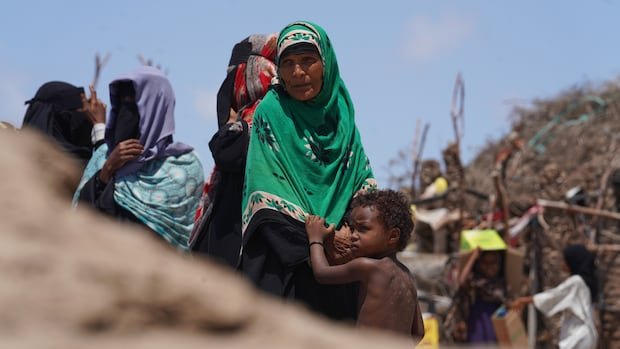
More than 200,000 individuals in Yemen have been displaced due to heightened conflict between Houthi rebels and Saudi-backed government forces, according to the International Organization for Migration (IOM). The rapid pace of displacement is concerning, with over 201,217 people forced from their homes, a significant increase from mid-September figures.
The Ta’iz governorate in southwestern Yemen, situated along the Red Sea coast, has witnessed the largest number of displacements among the country’s 43 million population. The IOM Director General, Amy Pope, expressed the dire situation, stating that people are fleeing for their safety but struggling to find secure refuge.
The resurgence of a long-standing civil war reignited in July following an attack by Yemen’s government on Sanaa airport, controlled by the Houthi rebels. This led to escalated tensions, with the Houthis seizing control of the Red Sea coast and prompting a counter-offensive by government forces supported by a Saudi-led coalition to maintain access through the Bab el-Mandeb Strait.
Amidst the conflict, the Saudi Foreign Ministry emphasized the importance of ensuring free navigation through the strait, a critical waterway off Yemen’s southwestern coast. The situation has escalated as diplomacy efforts have faltered, leading to increased hostilities and impacting the already vulnerable Yemeni population.
The fighting has intensified in Dhubab, a coastal town in Taiz governorate, with clashes also reported in Taiz’s Waziayah district. The Houthis have claimed missile and drone attacks on King Khalid International Airport in Riyadh, Saudi Arabia. Displaced Yemenis have sought shelter in makeshift camps across ten governorates within Yemen, with some fleeing to Djibouti by sea, facing perilous conditions during their journey.
The World Food Programme (WFP) recently warned of rapidly escalating food insecurity in Yemen due to the ongoing violence. Nearly three-quarters of families in areas accessible to WFP aid are struggling to meet basic food requirements, marking a record level of food insecurity. Many Yemenis are enduring extreme conditions, walking for days without sustenance, relying on meager resources like bread and foraged plants for survival.

