
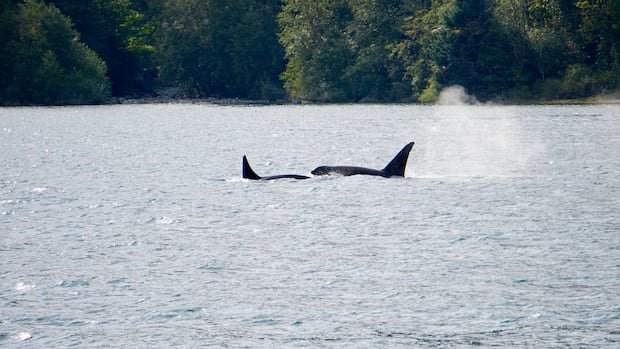
Renowned researcher John Ford has dedicated over four decades to studying the distinctive calls of West Coast orcas. His extensive collection of recordings is now accessible through an innovative online database, offering valuable insights into these marine mammals. The new tool aims to enhance conservation efforts by enabling the identification of orcas and reducing the risks of vessel strikes.
Ford, a respected scientist emeritus at Fisheries and Oceans Canada, initiated his study of orca vocalizations during his graduate studies in the late 1970s. He discovered that different orca subgroups utilize unique calls to communicate familial ties across vast distances while engaging in hunting and foraging activities.
The sounds, characterized by their stability over generations, are integral to orca social structure and are passed down through vocal learning. Ford’s meticulous cataloging of these calls, depicted in visual stereograms, has paved the way for the recent publication of these recordings in an online call catalogue by Simon Fraser University’s HALLO project.
This comprehensive database encompasses calls from various orca populations, including Bigg’s, northern residents, and southern residents, allowing users to filter by clan and pod. By comparing new recordings from a network of hydrophones along the coast to this catalogue, individuals can identify specific orca populations accurately.
Environmental science professor Ruth Joy from SFU highlighted the database’s significance in empowering citizen scientists to safeguard orcas from vessel collisions, a significant threat to the critically endangered southern resident orcas, whose population stands at a mere 75 individuals.
While the current catalogue does not provide individual identification within family groups or cover offshore orcas, its availability has opened avenues for understanding the intricate language of killer whales. Ford envisions the expansion of the catalogue to encompass more orca populations globally, encouraging researchers worldwide to create similar databases for their local orca communities.
The database launch marks a pivotal moment in orca conservation efforts, offering a valuable resource for researchers and enthusiasts alike to delve into the rich acoustic world of these majestic marine creatures.

