
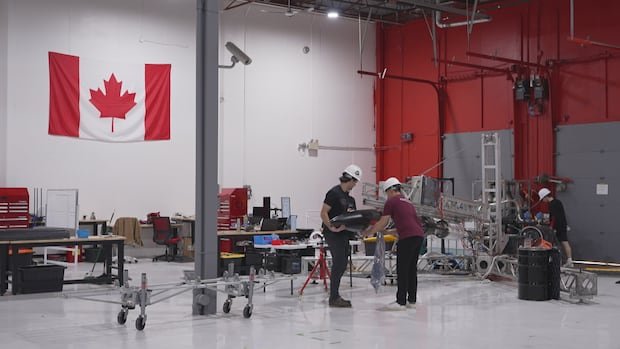
Canada, as the sole G7 nation lacking its own launch capabilities, is keen to develop a Canadian-made rocket. Several Canadian companies are in a race to provide the country with its own access to space, especially amid concerns that SpaceX might reduce its orbit launch services. However, these rocket companies face challenges such as high costs, tight deadlines, and evolving government priorities, complicating the journey to space.
Due to Canada’s current inability to launch rockets independently, customers within the country, both private entities and government agencies, rely on external providers to send their satellites into orbit. Notably, SpaceX launched all 12 Canadian satellites in 2025, emphasizing the nation’s dependence on outside forces for space access.
The significance of these satellites cannot be overstated, as they support crucial functions like telecommunications, military operations such as threat detection, and earth observation activities like wildfire monitoring. Marc Boucher, the founder of SpaceQ, a Canadian space publication, highlights the importance of Canada having control over its launches to prevent potential refusals from foreign entities.
In a bid to achieve space sovereignty, the Canadian government has identified space as a key sovereign capability and introduced legislation to authorize launches from Canadian soil. Recent funding injections, including $8.3 million each for three Canadian companies, aim to develop light-lift rocket capabilities by 2028.
Among these companies is NordSpace, established in 2022, which focuses on satellite and space technology development, including building rockets and launch infrastructure. Despite facing setbacks in its initial suborbital rocket test in 2025, NordSpace remains determined to succeed. Another player, Reaction Dynamics, has been working on a unique engine design since 2017, with both companies targeting orbital rocket launches by 2028.
Canada Rocket Company, the newest entrant, aims to construct a medium-lift rocket powered by nine methalox-fueled engines. With substantial private investments and government support, the company is optimistic about achieving its goal by 2032.
As SpaceX plans to phase out its Falcon 9 rocket in favor of the Starship, concerns arise for satellite customers reliant on Falcon 9 launches. This shift presents an opportunity for emerging rocket manufacturers, with Canada Rocket Company eyeing a share of the market left by Falcon 9. However, smaller players, especially those relying on SpaceX’s rideshare program, may face challenges due to reduced access.
Amidst the push for indigenous rocket capabilities in Canada, challenges like funding shortages and stringent testing requirements persist. While progress is being made, sustained financial support and technological advancements will be crucial for these companies to realize regular launches from Canada in the coming years.

