
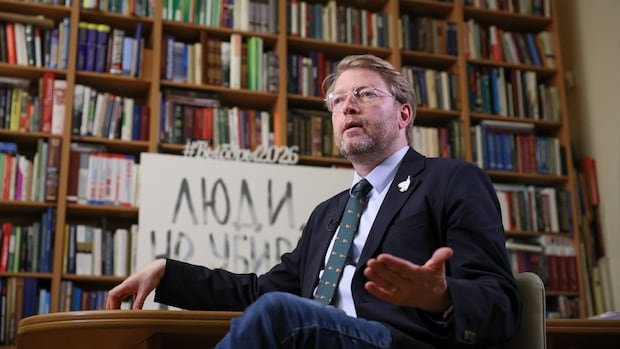
The head of Russia’s sole officially recognized anti-war party affirmed his commitment to stay in the country and advocate for change, despite escalating pressure from the authorities resulting in the party’s exclusion from the upcoming parliamentary elections. The Supreme Court’s recent decision to disqualify the post-Soviet liberal party Yabloko from the forthcoming vote in September, which translates to “apple” in Russian, was perceived by party leader Nikolai Rybakov as a reflection of the government’s unease over the resonance of their call to end the ongoing conflict in Ukraine among voters.
Rybakov emphasized the significance of the overwhelming public support they have garnered, stating that it outweighs the court’s ruling. Following the verdict, hundreds of supporters outside the court voiced their disapproval, chanting “shame” loudly enough for the sentiment to reach the courtroom.
Once a prominent liberal voice in parliament and a vocal critic of the government, Yabloko now holds only a few regional seats and lacks representation in the State Duma, where the Putin-backed United Russia party holds sway. Although United Russia is expected to maintain its dominance in the upcoming election to fill the 450-seat lower house, Rybakov expressed confidence that Yabloko would present a stronger challenge if permitted to participate.
Yabloko is currently appealing the Supreme Court’s decision, which stemmed from allegations in a lawsuit claiming undisclosed campaign support from Western entities, among other accusations that the party refutes.
Rybakov, a 47-year-old veteran of the opposition, affirmed his decision to remain in Russia despite stringent censorship laws and laws enacted during wartime that have prompted many dissenting voices to flee or face legal repercussions for expressing anti-war sentiments or dissenting views.
The public sentiment against the war, although challenging to gauge due to strict government controls on dissent, has shown a decline in support for the actions of the Russian armed forces in Ukraine. According to the Levada Center, a non-governmental pollster included in Moscow’s foreign agent list, the proportion of Russians approving of their armed forces’ actions in Ukraine decreased to 66% in July, marking the lowest level since February 2022.
Rybakov highlighted that Yabloko’s concise manifesto advocating for peace and a flourishing democratic Russia has attracted a wave of new supporters, indicating a substantial segment of Russian society yearning for an end to the conflict. He emphasized that while efforts may be made to sideline Yabloko through coercive measures, the shared beliefs of millions of individuals aligned with the party’s stance cannot be suppressed.
Social media platforms have been abuzz with videos endorsing Yabloko, featuring individuals, often without explicit political messaging, showcasing their support through symbolic gestures like holding apples when indicating their voting preferences for the upcoming election or dancing to Russian tunes referencing apples.

