
Bosnian Serb nationalist leader Milorad Dodik has announced his party’s win in Bosnia’s recent election, heavily influenced by economic issues, EU membership aspirations, and longstanding ethnic tensions stemming from the country’s devastating 1992-95 war.
Despite not being on the ballot, Dodik, a strong pro-Russia figure, played a pivotal role in the campaign, stoking separatist sentiments that have raised concerns about renewed unrest in Bosnia.
Previously serving as the president of Republika Srpska, Dodik faced a ban on holding public office due to his conviction last year for defying decisions made by the international mediator overseeing the post-war peace agreement.
With nearly 90% of the votes tallied, Dodik’s associate, Zeljka Cvijanovic of the right-wing Alliance of Independent Social Democrats, secured over 55% of the votes for a spot in the country’s three-member presidency, leading her closest rival by a significant margin.
In a late-night press briefing, Dodik expressed confidence in his party’s dominance in Republika Srpska’s assembly and attributed his electoral success to the backing of U.S. President Donald Trump’s hypothetical 2024 victory and Russian President Vladimir Putin’s support.
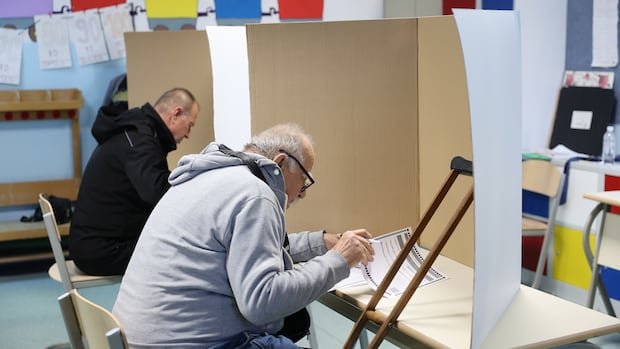
The election saw a total of 3.4 million eligible voters selecting members for the multi-ethnic presidency, national parliament lawmakers, and entity institution heads for both the Muslim-majority Federation of Bosnia and Herzegovina and the Serb-dominated Republika Srpska.
Amid the electoral outcome, nationalist Croatian Democratic Union candidate Darijana Filipovic led for the Croat presidency seat, while incumbent Bosniak member Denis Becirovic of the Social Democratic Party held a slight lead over his closest competitor, Bakir Izetbegovic, both declaring victory before final results were confirmed.
The Central Election Commission reported a voter turnout of 42%, with 1,432,269 ballots cast, a decrease from the previous election in 2022.
Bosnia’s political landscape, shaped by a complex governance structure established post-war, has been further strained by Dodik’s persistent challenges to the national government and his pursuit of Republika Srpska’s secession.
At a campaign rally, Dodik voiced his belief that Bosnia is “dead,” asserting its lack of viability, a sentiment echoed by his continued defiance of the current system.
The country’s deep-rooted ethnic divisions, where Bosniaks, Serbs, and Croats predominantly align along ethnic lines, have hindered Bosnia’s EU accession progress despite external encouragement for united reform efforts.
Analyst Dragan Bursac highlighted Dodik’s enduring influence despite his absence on the ballot, underscoring the limitations of attempts to sideline him from politics.
Steeped in post-war challenges, Bosnia, one of Europe’s poorest nations, continues to grapple with healing from the conflict that erupted in 1992, claiming over 100,000 lives and displacing millions.
Recent events, including tributes in Serbia and among Bosnian Serbs to convicted war criminal Ratko Mladic, have reignited wartime wounds, particularly over the Srebrenica massacre, perpetuating ethnic tensions.
The latest election marked a technological milestone for Bosnia, employing electronic voter identification and ballot scanners to enhance security and deter electoral malpractices that have marred previous polls.
However, reports of technical glitches delaying voting at various polling stations raised concerns about the new digital systems’ impact, prompting adjustments to extend polling hours in affected areas.

