
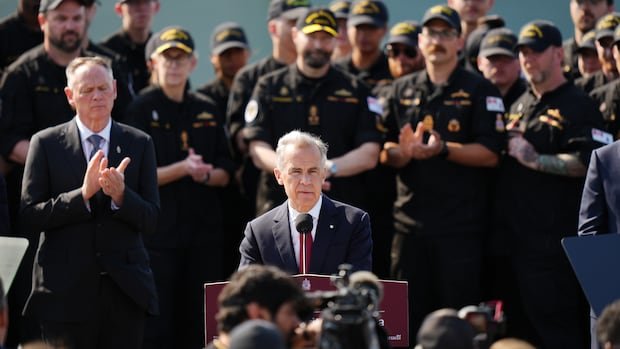
In a significant announcement, Prime Minister Mark Carney revealed that Canada is in negotiations with German shipbuilder ThyssenKrupp Marine Systems (TKMS) to purchase up to twelve submarines. This decision marks the conclusion of a highly competitive process to replace Canada’s aging Victoria-Class submarine fleet.
Both competing bids, one from South Korea in partnership with Hanwha Ocean and the other from Germany and Norway with TKMS, went beyond merely offering submarines. They included commitments to make substantial investments in Canada’s economy. While specific details remain confidential due to ongoing negotiations, here are five key points from what Carney described as “the most critical defense procurement in Canadian history.”
TKMS has proposed delivering four Type 212CD submarines to the Royal Canadian Navy by 2036, with the first submarine expected by 2034. This timeline aligns closely with the South Korean bid, which also offered to supply four submarines by 2035. The urgency stems from the planned retirement of Canada’s current submarine fleet in the mid-2030s, with only one operational vessel currently.
Carney emphasized the high qualifications of both suppliers and the difficulty in choosing between them. Selecting the TKMS bid means Canada will now move forward with negotiations to potentially procure up to twelve submarines.
The deal with TKMS includes a provision that requires 100% of the government’s investment value to be matched by economic benefits to Canada. Carney highlighted that TKMS’s investments across defense and industrial sectors, such as space, munitions, autonomous technology, critical minerals, and research and development, could amount to tens of billions of dollars.
Prior to the announcement, projections indicated that the combined investments from TKMS and the German government could boost Canada’s GDP by $86 billion. Additionally, the TKMS contract is expected to generate over 100,000 jobs, ranging from direct submarine construction roles to various skilled positions like welders, engineers, and researchers.
Germany’s bid aligns with several of Canada’s economic objectives, including its aim to increase LNG production to 50 million tonnes annually by 2030. The proposed investments from TKMS cover a wide range of areas, from establishing maintenance facilities and manufacturing centers for torpedoes to transforming Manitoba’s Port of Churchill into an LNG export hub.
Furthermore, the TKMS submarines’ compatibility with NATO forces, as the company is already a NATO supplier, ensures seamless communication and joint missions with allied forces. This deal further strengthens Canada’s ties with NATO and Europe, as TKMS’s platform is designed for Arctic waters and NATO interoperability.
While the German bid offers substantial benefits for Canada’s coasts, particularly in shipbuilding and maintenance, Carney emphasized that the Indo-Pacific strategy remains a priority for Canada. Hanwha Ocean remains the backup supplier if negotiations with TKMS do not reach a successful conclusion.
In summary, Canada’s decision to enter negotiations with TKMS for submarine procurement signifies a significant milestone in the country’s defense procurement history, with far-reaching economic and strategic implications for the nation.

