
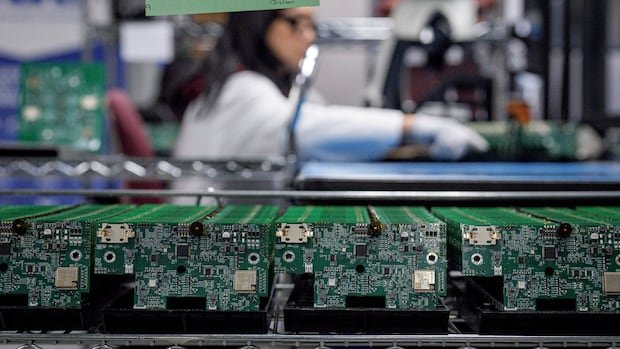
In the midst of the escalating trade tensions between Canada and the U.S., photographer Evan Mitsui from CBC has been documenting the impact on businesses in southern Ontario affected by tariffs. Businesses dealing with products such as furniture, live flowers, and circuit boards now facing new U.S. tariffs all express a common sentiment: uncertainty.
Founder and president of MIS Electronics Inc. in Richmond Hill, Ont., Saeid Mohmedi, who has over 25 years of business experience, acknowledges the unprecedented challenges posed by the current situation. Despite weathering past storms, Mohmedi admits the uncertainty ahead, particularly due to the unpredictability associated with the current administration.
MIS Electronics specializes in manufacturing printed circuit boards (PCBs) for clients in various sectors, including automotive and electronics. While Mohmedi’s primary clientele are Canadian companies, many of them export products to the U.S., making them susceptible to the impact of the tariffs.
The disruptions in the supply chain have led to increased costs for Mohmedi’s business. Although the components for the PCBs are sourced from Taiwanese companies, the procurement process often involves the U.S., resulting in higher expenses and logistical challenges.
The tech industry in Ontario, particularly in Markham and Richmond Hill, focuses on PCB production, integral to electronic devices’ functionality. While larger multinational companies like Siemens and Celestica cater to enterprise electronics, smaller businesses like MIS fulfill business-to-business orders in bulk quantities, supplying PCBs for various applications ranging from handheld radios to medical devices.
With 70 employees and a significant manufacturing space, MIS represents a typical small-to-medium-sized business that is directly impacted by the current trade dynamics. The recent Section 338 tariffs, targeting Canadian-made PCBs at a 50% rate, have put companies like MIS at the forefront of the trade war’s repercussions.
In response to the challenges, Mohmedi emphasizes the importance of supporting local manufacturing and onshoring supply chains. By advocating for Canadian-made products and incentivizing domestic production, businesses like his aim to mitigate the adverse effects of the tariffs and enhance demand for Canadian goods.
Mohmedi has taken proactive steps by diversifying into producing touchless faucets using locally sourced parts, filling a gap in the market previously dominated by imported American products. This strategic shift not only helps in creating new opportunities but also underscores the potential for a stronger domestic manufacturing sector.
As the uncertainties persist, Mohmedi remains resolute in his belief that promoting Canadian manufacturing can lead to a more sustainable and cost-effective solution compared to relying on imports from the U.S.

