
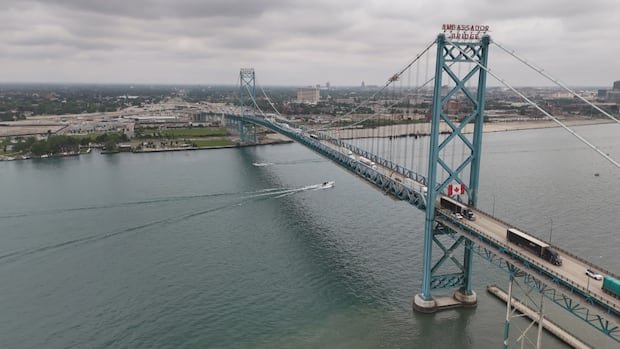
In recent months, there has been increased uncertainty surrounding the much-anticipated opening of the Gordie Howe International Bridge. Representatives from the privately-owned Ambassador Bridge, located along the Detroit River, have been actively reaching out to trucking companies in an apparent effort to retain their business, according to a statement from an industry spokesperson.
Lak Shoan, who serves as the director of policy for the Ontario Trucking Association, revealed that his organization had started receiving reports from a few members about the Ambassador Bridge’s outreach activities during the spring. He mentioned that this information was shared informally and not as an official disclosure.
Several Canadian trucking companies with cross-border operations were contacted by CBC Windsor to inquire if the Ambassador Bridge had proposed any toll rate deals. Responses varied, with some declining to discuss private agreements and others remaining silent. However, a now-deleted post from a U.S. trucking union official in late July instructed members not to use the newly opened Gordie Howe bridge due to a significant cost-saving contract with the Ambassador Bridge.
Toll rates and revenue played a crucial role in the prolonged political process leading to the opening of the $6.4 billion Gordie Howe bridge, fully funded by the Canadian government. The agreement to operate the bridge includes a provision allowing the U.S. government to prevent toll reductions below the average of comparable crossings.
The Moroun family, owners of the Ambassador Bridge since 1979, intensified their political influence efforts ahead of former U.S. President Donald Trump’s attempts to impede the new bridge’s opening. Despite delays and political hurdles, the Gordie Howe bridge finally commenced operations on July 27, following a previous postponement at the U.S. government’s request.
Allegations have arisen that Trump intervened to favor the Morouns by obstructing the new bridge’s inauguration. While representatives of the Ambassador Bridge did not respond to inquiries, their website mentioned a discounted toll program for specific trucking companies.
The trucking association spokesperson, Shoan, acknowledged the benefits of healthy competition between the bridges, potentially leading to reduced toll expenses for trucking companies. Financial details provided by JT Barrett, the UAW Local 212 Chair, shed light on the cost-saving arrangement between FCA Transport and the Ambassador Bridge.
Stellantis, the parent company of FCA Transport, declined to confirm the exclusive toll contract status of their drivers with the Ambassador Bridge. They expressed enthusiasm for utilizing the Gordie Howe bridge to enhance logistical operations across their manufacturing facilities in both countries.
Shoan emphasized that the prevailing uncertainty surrounding the Gordie Howe bridge’s opening likely made any offers from the Ambassador Bridge enticing to trucking firms seeking stability amidst economic fluctuations.

