
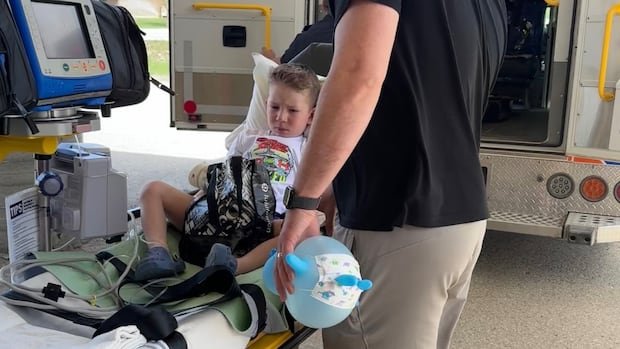
A family residing in Biggar expressed frustration over the lack of nearby emergency medical services, resulting in significant financial implications. Amy Haynes recounted an incident where they urgently needed an ambulance for her three-year-old son Nolan, who developed a high fever exceeding 40°C. Despite being advised at a local clinic that Nolan required immediate emergency care due to the severity of his fever, the family faced challenges accessing appropriate medical assistance.
Upon calling for an ambulance, they were informed that all hospitals in Saskatoon, North Battleford, and Swift Current had no available beds. This led to a distressing situation where the only option was a lengthy two-and-a-half-hour ambulance journey to Prince Albert, incurring a hefty cost of $1,300 for a one-way trip.
Receiving the bill was disheartening for Haynes, who expressed disappointment but acknowledged the lack of responsibility on their part for the unavailability of closer medical facilities. Nolan was eventually diagnosed with a form of pneumonia and received treatment in Prince Albert before being able to return home.
The story of the family’s ordeal was brought to light by the provincial Opposition NDP during a news conference in Biggar. NDP MLA Keith Jorgenson emphasized the critical message this situation sends to rural Saskatchewan residents regarding the accessibility of emergency services and the potential life-threatening consequences of delayed medical care due to distance.
The NDP raised concerns about the impact of hospital capacity issues on patients and families, prompting the provincial government to address the situation. The government informed CBC that efforts are underway to enhance hospital capacity in Saskatoon by adding 146 more beds. It also clarified that ambulance services are not covered under the Canada Health Act, and there is no insurance coverage for inter-hospital ambulance transfers.
The incident underscores the challenges faced by rural communities in accessing timely and affordable emergency medical care, shedding light on the broader issues of healthcare infrastructure and service delivery in remote areas.

