
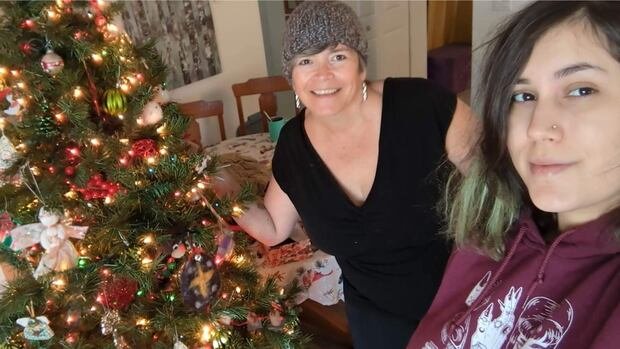
On a snowy day in November, my daughter Kit and I were dividing four boxes of tree ornaments, each of us selecting our own share. Kit, now living independently, was eager to set up her own Christmas tree. Unpacking the decorations, however, brought back years of sorrow and loss for children who were no longer part of our holiday celebrations.
Over eight years, our family fluctuated with the presence of 23 foster children. Most stays were temporary, and during our fostering journey, our two children became permanent members of our family through adoption. I was amazed to find out that Kit remembered the stories behind each handmade ornament, even those crafted by individuals she had never met. It was surprising to realize that her holiday recollections differed significantly from mine.
As I opened a box, I uncovered a tree topper given to my husband and me on our first Christmas together as newlyweds. Examining the iridescent angel, my fingers traced the crack between its wings and body. Although Krazy Glue held the angel together, our marriage could not withstand the strain. Passing the angel to Kit, I wondered if she would want such a fragile keepsake. Her eyes sparkled beneath her festive reindeer hat.
“Mom, remember how I always wanted to be the one to place the angel atop the tree? I thought I’d never reach the height needed.” We shared a laugh. “You’ve grown enough now, right?” And so, it was decided – the angel would go with Kit.
In another tin, I came across a Santa sleigh and reindeer combination. Crafted by an eight-year-old boy we once fostered, he had made it from foam blocks and pipe cleaners at a community Christmas gathering. A mix of lingering grief and frustration washed over me. Despite efforts, the boy was not made a permanent ward after spending five years in our care. We were prohibited from seeing or speaking to him afterward, and his parents were understandably cautious. We hoped he knew how much we cared for him – a sentiment that remains.
Sensing my shift in mood, Kit took the Santa decoration from me. “You used to place this one lower on the tree so I could play with it. I adore this guy. Look at the flames at the back of the sleigh – just like in a movie.”
I had often pondered why the boy had attached those red pipe cleaners to the sleigh. Kit, however, had a different perspective. Similar to our foster children, she preferred watching “National Lampoon’s Christmas Vacation” on Christmas Eve rather than attending a city church service.
Creating inclusive Christmas experiences for the foster children under our care was a priority for my former husband, our parents, and me. We chose to host our family Christmas dinner on days other than December 24th or 25th, allowing the children to spend Christmas with their own families without feeling excluded from our festivities. We established a tradition of gifting each child unique ornaments to hang on the tree or keep in their rooms. Upon leaving our home permanently, they could opt to leave the ornament with us as a memento or take it as a keepsake. This practice is how the Santa and reindeer ornament crafted by our eight-year-old foster son became part of my collection.
Uncovering another reindeer ornament made of chocolate-colored pompoms, ribbon, googly eyes, and pipe cleaner antlers, I recalled how a recycled curtain hook and a generous dab of glue kept the quirky ornaments in place on the tree. Recalling my then nine-year-old son’s humorous moniker for the matched set, I chuckled, “Big Balls!”
Dividing Christmas ornaments wasn’t a new experience for me; two decades ago, my former husband and I had divided our possessions, including holiday decorations. At that time, I assumed our young adopted children and older foster kids were oblivious to the care we took to ensure fairness, right down to sharing the two silly reindeer ornaments.
Turning the pompom Rudolph in her hands, Kit remarked, “You know, Mom, I loved knowing that wherever I celebrated Christmas, Rudolph would adorn the tree – and he still does.” Her insight caught me by surprise, revealing lessons she had gleaned from our divorce that I had not noticed.
This year’s tree decoration process holds a new promise for me. My daughter’s joyful perspective is likely to overshadow any sadness I had associated with each ornament. I eagerly anticipate seeing her tree adorned with memories and cheer.

