
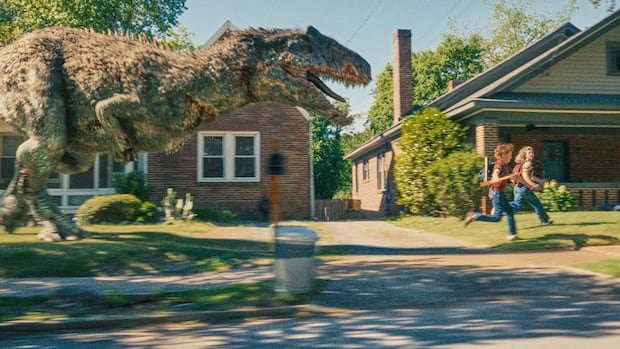
In a recent film titled “The End of Oak Street,” viewers witness various prehistoric creatures coming to life in a unique way that diverges from traditional Hollywood portrayals. This movie, riding on the coattails of the iconic “Jurassic Park,” introduces a fresh take on dinosaurs with an emphasis on feathers, a feature often overlooked in mainstream films.
Paleontologists have long advocated for a more accurate representation of dinosaurs in media, emphasizing their bird-like characteristics, including the presence of feathers. The movie’s inclusion of these features marks a significant departure from past depictions, reflecting a shift towards aligning with current scientific understanding.
One notable aspect of the film is the portrayal of dinosaur mating behavior, a subject that has intrigued both scientists and movie enthusiasts alike. While the accuracy of such depictions remains speculative due to the limited fossil evidence available, the film’s creative approach adds an element of intrigue to the narrative.
Furthermore, the movie introduces imaginative renditions of prehistoric creatures, blending scientific plausibility with artistic license. From feathered Allosaurus to speculative interpretations of lesser-known species, “The End of Oak Street” offers a fresh perspective on dinosaur diversity while sparking curiosity about the untold aspects of their lives.
Overall, the film’s exploration of dinosaur behavior, anatomy, and interactions with their environment adds a layer of complexity to the narrative, inviting audiences to ponder the mysteries of these ancient creatures. While some artistic liberties may have been taken, the movie succeeds in captivating viewers with its imaginative take on the prehistoric world.

