
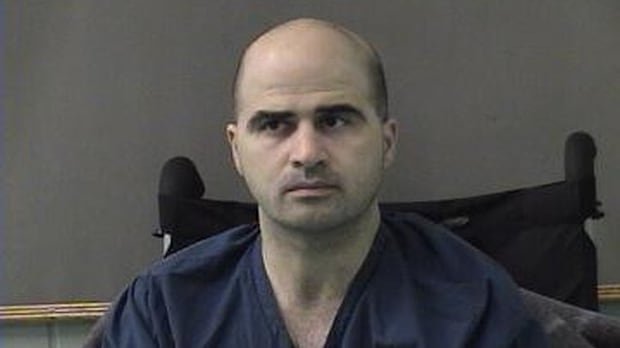
The former U.S. army officer who was found guilty of killing 13 individuals in the 2009 shooting spree at Fort Hood, Texas, is set to face execution by firing squad in December, marking the first U.S. military execution in over 65 years. Acting U.S. army secretary Adam Telle announced via social media that army Maj. Nidal Malik Hasan will undergo the firing squad execution on December 3 at Fort Hood after U.S. President Donald Trump gave his approval.
The news caught Hasan’s former civil case attorney off guard and raised concerns among military law experts regarding the execution procedures and notification processes for death row inmates within the army’s jurisdiction. Questions have arisen about the formation of the firing squad and the specific protocols that would be followed, given that the last military firing squad execution took place shortly after World War II.
Notably, the military execution protocol does not outline detailed guidelines for specific execution methods. Historically, in previous instances of firing squads nearly 80 years ago, one shooter would have a blank round to create uncertainty among the firing squad members about who fired the fatal shot.
Hasan, a former army psychiatrist, perpetrated the deadly attack by entering a medical facility at Fort Hood and opening fire, citing his opposition to soldiers being deployed to Afghanistan. Despite being denied the opportunity to present his defense during the trial, Hasan admitted to being the shooter and described himself as a defector. Legal experts suggest that Hasan could potentially prolong the execution process by seeking recourse through federal civilian courts via a Habeas Corpus petition.
The resumption of federal executions by Trump after a hiatus during previous administrations resulted in a series of executions, making him the most prolific execution president in over a century. Death sentences within the military justice system are rare, with executions even more infrequent. Currently, Hasan is one of four individuals on the military’s death row at Fort Leavenworth, Kansas.
The rush to carry out Hasan’s execution has been deemed “horrific” by his former attorney, who raised concerns about the haste and the lack of legal representation during the notification process. The execution location and transportation arrangements for Hasan, who is paralyzed and reliant on a wheelchair, have also been subjects of scrutiny.
Speculation arose before the decision to execute Hasan at Fort Hood that the army might explore collaborating with states like South Carolina or Utah, which have reinstated firing squads for executions. South Carolina, in particular, has conducted three firing squad executions in the past 18 months. The state’s firing squad protocol involves three shooters aiming at the prisoner from a specific distance, with live rounds being simultaneously fired at the prisoner’s heart.
South Carolina’s execution method necessitated a considerable investment in renovating its death chamber for firing squad executions.

