
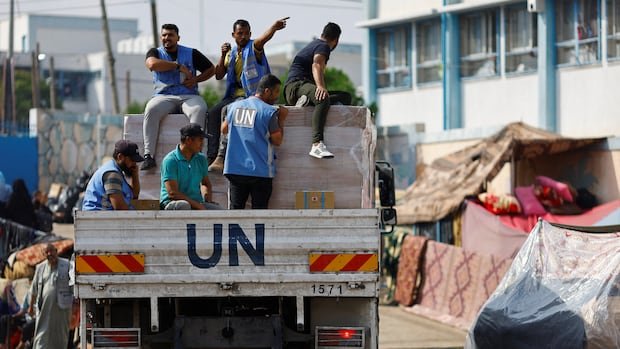
At least 350 humanitarian workers lost their lives globally last year, marking another tragic year for violence against aid workers, as reported by the United Nations. The UN’s Office for the Coordination of Humanitarian Affairs (OCHA) revealed that the death toll decreased slightly from the previous year, which saw the highest number of fatalities on record with 387 aid workers killed worldwide.
In addition to the fatalities, 322 aid workers sustained injuries in attacks in 2025, while 235 were abducted, according to data from the Aid Worker Security Database. UN Secretary-General António Guterres emphasized the increasing dangers faced by those serving others in a video message on World Humanitarian Day.
The Gaza Strip continued to be the most perilous area for aid workers for the third consecutive year, with 186 fatalities in 2025 due to Israel’s conflict in the Palestinian enclave. Additionally, 71 aid workers were killed in Sudan amid an ongoing civil war between the Sudanese Armed Forces and the paramilitary Rapid Support Forces.
Tom Fletcher, the UN’s humanitarian chief, expressed deep concern over the escalating violence, stating that over 1,000 aid workers have been killed in the past three years, which he deemed unacceptable. Fletcher emphasized the need for states to uphold international humanitarian law and take decisive actions to protect civilians and aid workers, ensuring accountability for those who violate rules.
As of the current year, OCHA reported that 82 aid workers have been killed, 97 injured, and 39 kidnapped. The UN also highlighted the alarming use of armed drones in conflict zones, citing instances where drones targeted markets and health facilities in Sudan, resulting in a significant number of civilian casualties. Fletcher warned that weaponized drones pose a new threat to civilian lives through deliberate or reckless actions.
The UN’s call for greater protection of aid workers and civilians in conflict zones underscores the ongoing challenges faced by humanitarian personnel worldwide.

