
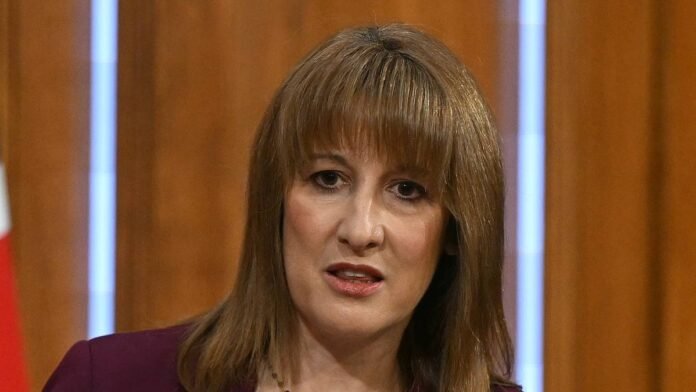
Government borrowing costs surged and over £26 billion was erased from the FTSE 100 following the Labour party’s apparent reversal on income tax plans. Reports suggesting that Chancellor Rachel Reeves and PM Keir Starmer abandoned the tax hike proposal, which contradicted a manifesto commitment, rattled investors who had anticipated its implementation due to recent speculation.
It is reported that Ms. Reeves put aside her income tax plan after receiving more positive forecasts than expected from the Office for Budget Responsibility. While this move could benefit the Chancellor, the uncertainty surrounding the policy unsettled financial markets.
The yield on 10-year UK government gilts spiked to 4.57% in early trading on Friday, the sharpest increase since July, before easing to approximately 4.50%. Longer 30-year gilts reached 5.32%. Gilts serve as government-issued IOUs to secure funds for expenditures beyond tax revenues.
Ms. Reeves has pledged to reduce interest payments on the government’s substantial debt, projected to exceed £110 billion this year alone. The higher gilt yields also pose a risk of pushing up fixed-rate mortgage expenses for new borrowers or those seeking to refinance.
The FTSE 100 index of major UK-listed companies plummeted by roughly 120 points, its most significant one-day decline since April, while the pound depreciated by 0.5% against the US dollar. The Treasury closely monitors gilt yields and the pound’s value throughout the day to assess market reactions ahead of the upcoming Budget on November 26.
Nigel Green, CEO of financial advisory firm deVere Group, stated that the government’s credibility could be at stake due to rising borrowing costs and weakening sterling, signaling market concerns over perceived governmental indecisiveness.
Hal Cook, senior investment analyst at Hargreaves Lansdown, noted that the potential scrapping of planned income tax increases by Labour triggered a sell-off in gilts, reflecting investor worries about the UK’s deficit and long-term debt dynamics.
The FTSE 100 had already experienced a decline on Thursday following reports of a slowdown in UK economic growth in the previous quarter. Despite recent market fluctuations, the index has maintained an 18.7% year-to-date gain, potentially attracting cautious investors seeking buying opportunities.
Additionally, it has been reported that the Office for Budget Responsibility is expected to inform Ms. Reeves of a projected Budget shortfall of around £20 billion.

