
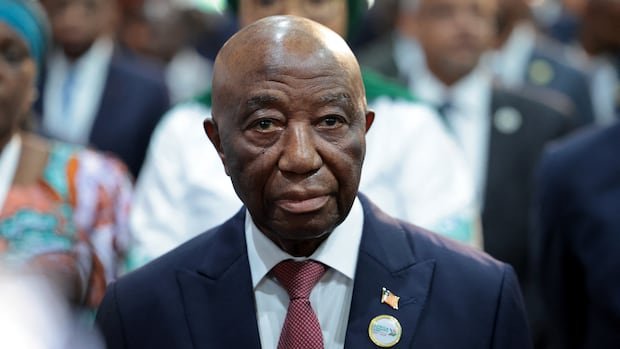
Liberia has agreed to receive a maximum of 1,200 third-country deportees from the United States over the next year, with an initial batch of 20 individuals scheduled to arrive on Thursday, according to a statement from the Liberian government. The statement issued on Tuesday specified that the deportees would consist of individuals from various African and Western Hemisphere nations who have been medically cleared for travel. Specific details regarding the nationalities of the deportees were not immediately disclosed, as per the U.S. State Department’s policy of non-disclosure.
Historically, the U.S. has adhered to the non-refoulement principle in domestic immigration laws and international agreements. This principle prohibits the return of migrants to countries where their human rights, safety, or freedom may be at risk due to factors such as race, religion, or nationality. However, the current administration under President Donald Trump has entered into agreements with several African nations and other countries worldwide to deport individuals who cannot be sent back to their countries of origin. While these deals have faced criticism for the lack of notice provided to deportees, they have been defended as lawful by the U.S. government.
Legal experts have pointed out that the Trump administration’s use of third-country deportations exploits a legal loophole, often leaving migrants in unfamiliar territories and compelling them to find ways back to their home countries. Liberian President Joseph Boakai was part of a group of West African leaders who met with President Trump last year, where Trump encouraged them to accept third-country deportees.
The Liberian government emphasized that the deportees would be treated as guests and would be free to depart at their discretion or apply for asylum within Liberia. The government clarified that the arrangement did not involve any form of compensation or quid pro quo with the U.S. Furthermore, Monrovia was not making any demands for reimbursement for hosting the deportees.
Senate Democrats raised concerns about the exploitative nature of such agreements, citing examples where the U.S. paid millions of dollars to countries like Equatorial Guinea, Rwanda, El Salvador, Eswatini, and Palau to accept deportees. This practice was criticized as using deportation as leverage through secret cash transactions and diplomatic pressures.
Besides Liberia, other African nations such as the Democratic Republic of Congo, Central African Republic, Cameroon, Ghana, and Sierra Leone have also accepted third-country deportees from the U.S. as part of similar arrangements.
In a broader strategy to reduce the foreign-born population in the U.S., the Trump administration has taken steps to encourage undocumented individuals to voluntarily leave the country, including revoking a significant number of visas. Recent court decisions have allowed the administration to terminate legal protections for various immigrant groups, including Ethiopians, South Sudanese, Myanmarese, and Somalis.
The termination of temporary protected status (TPS) for individuals from these countries has been a contentious issue, with critics arguing that it could harm the U.S. economy and vital sectors like construction and healthcare by depriving them of essential workers. The U.S. Chamber of Commerce and the U.S. Conference of Catholic Bishops have voiced opposition to the end of TPS protections, highlighting concerns about economic impacts and the treatment of migrants in the country.
This move aligns with the Trump administration’s broader immigration policies, which have faced scrutiny and debate both domestically and internationally.

