
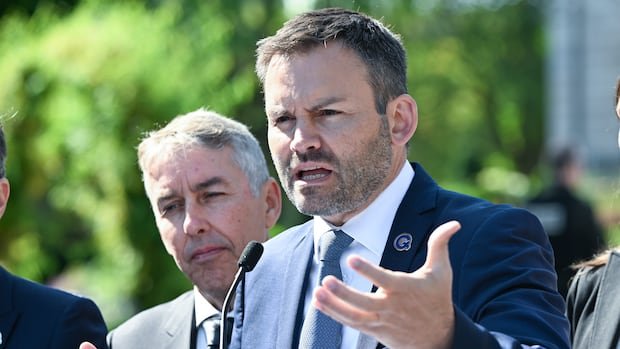
Parti Québécois Leader Paul St-Pierre Plamondon faced criticism from his political opponents on Friday following the disclosure that his proposed sovereignty referendum would come with a price tag of at least $130 million.
During the campaign, three out of the five party leaders contended that there were more beneficial ways to allocate these funds, while the sovereigntist left-wing party Québec Solidaire supported the expenditure.
In an interview with The Canadian Press, St-Pierre Plamondon outlined the expenses associated with organizing and conducting the referendum in either 2029 or 2030 under a Parti Québécois administration. The referendum budget encompasses $20 million for preliminary studies and consultations in the initial years of the party’s mandate, with an additional $110 million estimated for holding the referendum in 2029-30.
St-Pierre Plamondon acknowledged the possibility of surpassing the projected costs due to unforeseen expenditures but emphasized the importance of democratic consultation and people’s participation in decision-making processes.
The specifics of his party’s referendum plans will be included in the financial blueprint set to be unveiled on September 15, coinciding with the first leaders’ debate in the provincial election campaign culminating on October 5 when Quebec residents head to the polls.
Criticism of the referendum proposal was swift from rival party leaders. Coalition Avenir Québec leader Christine Fréchette pointed out the absence of certain cost details in St-Pierre Plamondon’s strategy, highlighting the unaddressed expenses that could arise post-referendum.
In a separate press conference, Quebec Liberal Leader Charles Milliard characterized the planned expenditure as a misallocation of resources, suggesting alternative beneficial uses for the $130 million budget.
Conservative Leader Éric Duhaime also condemned St-Pierre Plamondon’s initiative, deeming it inappropriate to plan such expenditures amidst high living costs and contrasting the perceived detachment of the Parti Québécois from current economic realities.
St-Pierre Plamondon defended his referendum budget, citing the comparable costs of general elections in the province and emphasizing the potential long-term savings and efficiency that Quebec independence could bring by eliminating duplication of federal services.
Additionally, Québec Solidaire co-spokesperson Ruba Ghazal advocated for inclusive consultations on Quebec sovereignty, emphasizing the necessity of engaging diverse segments of society in the decision-making process.
If elected premier on October 5, St-Pierre Plamondon disclosed plans to appoint a minister dedicated to the independence process, underscoring the party’s commitment not to expand the size of the relevant ministry.
Despite facing demands for transparency regarding referendum costs, St-Pierre Plamondon defended his party’s budgetary prudence and asserted that the forthcoming financial framework would outline a realistic blueprint for Quebec’s future within the current economic context.
The PQ leader affirmed that the budget would not incorporate post-referendum promises, such as establishing a Quebec army, as the envisioned changes would only take effect following Quebec’s potential independence.

