
The U.S. government watchdog has published its initial assessment on the aftermath of the conflict with Iran, recognizing deficiencies in advanced military weaponry and revealing the extent of damage to American assets in the Middle East. The Pentagon inspector general’s report, released on Monday, provides the most comprehensive official review to date of the toll in terms of American casualties, financial expenditure, and physical destruction resulting from Operation Epic Fury, which had amassed an estimated cost of $33.4 billion as of June 29. Secretary of Defense Pete Hegseth informed Congress in late July that the total expenses had reached $37.5 billion.
The report highlighted that the war with Iran has led to critical shortages in strategic weaponry and exposed bottlenecks in the industrial base for munitions resupply concerning advanced armaments. Military experts anticipate it will take approximately three years for defense contractors to restore stocks of advanced missiles and defensive interceptors to pre-war levels. Despite reports of munitions scarcity, the Pentagon has consistently refuted claims, asserting that the U.S. military possesses adequate armaments for any combat scenario. President Donald Trump asserted in a social media post on Monday that the U.S. is currently manufacturing more sophisticated and elite weapons than ever before.
The watchdog report, spanning from April 1 to June 30, also acknowledged that Iranian attacks inflicted damage on numerous structures at U.S. bases across various countries in the Middle East. Notably, the U.S. naval base in Bahrain, a critical Navy logistics center in the region, was targeted by Iranian drones and ballistic missiles, necessitating a shift in supply routes to alternative bases such as Diego Garcia. Acting U.S. Navy Secretary Hung Cao disclosed in an interview that significant damage was incurred in Bahrain, prompting an evaluation of repair requirements to sustain operations in the region.
The report further detailed the damages incurred by U.S. diplomatic facilities in several countries due to Iranian strikes, amounting to $184 million. Concurrently, construction projects at various American outposts in countries like Israel, Egypt, and Oman experienced delays as a result of the conflict. The State Department reported additional costs of $113 million, with a substantial portion allocated to executing contingency plans, including evacuating U.S. personnel and citizens from the affected regions.
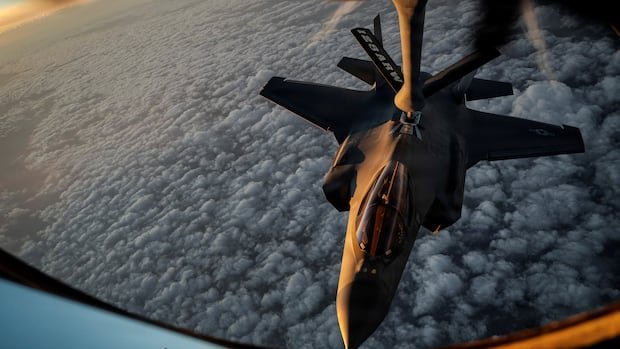
Numerous American aircraft and drones suffered destruction or damage as a consequence of the conflict with Iran, including the loss of approximately 30 MQ-9 Reaper drones, each valued at around $30 million. Additionally, seven KC-135 refueling aircraft were impacted, with five being struck by Iranian munitions while grounded in Saudi Arabia. Tragic incidents such as the crash of a KC-135 in Iraq resulting in the deaths of six service members, alongside the demise of a helicopter pilot in the Arabian Sea, were recorded as non-hostile events. Eleven other service members were reported as “killed in action” across various locations in Kuwait, Iraq, Jordan, and Saudi Arabia.
The State Department highlighted emergency and non-emergency military sales exceeding $44 billion during the specified period, predominantly benefiting Saudi Arabia. These sales encompassed military helicopters, munitions, and advanced precision weapons systems. Furthermore, regional countries such as Qatar, Kuwait, the United Arab Emirates, and Israel received substantial sales amidst Iran’s retaliatory actions against nations hosting U.S. military installations.

