
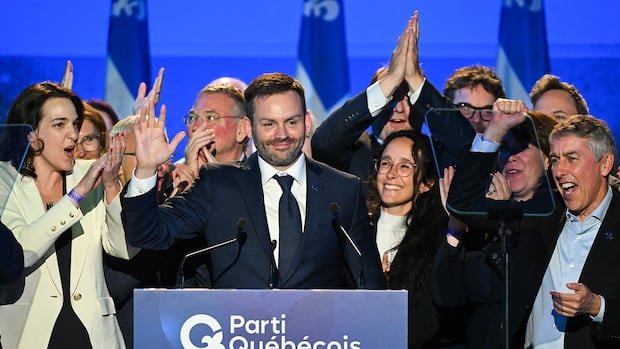
The Parti Québécois, a sovereigntist party, has won enough seats to form a minority government, marking a return to power after the Coalition Avenir Québec’s eight-year rule. Paul St-Pierre Plamondon, the leader of the PQ, focused his campaign on a platform of change, which resonated with voters as dissatisfaction with the CAQ grew.
Under St-Pierre Plamondon’s leadership, the PQ has adopted a more conservative approach, vowing to cut government spending, enhance French language protection, and reduce immigration levels. The party also aims to prepare for a referendum, scheduled for after the end of U.S. President Donald Trump’s term in 2029.
The PQ’s fiscal strategy includes a $6.6-billion spending reduction over five years by streamlining government operations, a plan criticized by some experts as overly ambitious. St-Pierre Plamondon intends to redirect these savings into sectors like healthcare and education. In a bid to alleviate financial burdens on consumers, the party has pledged to eliminate provincial sales tax on second-hand goods, halve Quebec’s sales tax on gasoline temporarily, and expand benefits under the parental insurance plan.
Regarding healthcare reforms, St-Pierre Plamondon plans to abolish Santé Québec, a government agency introduced by the CAQ, arguing it adds unnecessary bureaucracy. The PQ also proposes investing $150 million over four years in local community service centers (CLSCs) to improve access to the healthcare system.
The party’s stance on immigration entails reducing the number of permanent immigrants to 35,000 annually, a significant drop from the previous year. Additionally, the PQ aims to lower non-permanent immigration quotas, a move that may clash with business groups advocating for increased immigration to address labor force needs.
In terms of language laws, the PQ aims to extend the Charter of the French Language to CEGEPs and children of non-permanent residents residing in Quebec for over a year. The party also plans to enhance French language requirements for work permits, with exceptions for certain sectors like agriculture. Another proposal includes allocating 10% of all assignment grades in schools to French proficiency.
On the federal front, St-Pierre Plamondon anticipates conflicts with Ottawa, particularly regarding Quebec’s secularism law, Bill 21. The party aims to strengthen Quebec’s values and prepare for independence, suggesting potential tensions with the federal government.
While a referendum is on the horizon, the PQ faces challenges with only a minority government. Convincing Quebecers to support independence will be an uphill battle, as polls indicate strong opposition to a referendum. The party has allocated funds for studies and consultations to pave the way for a potential vote, but with limited support in the National Assembly, the path to a referendum remains uncertain.

