
Most individuals find it unacceptable for the House of Lords to obstruct a bill after it has been approved by Members of Parliament in the House of Commons. A recent YouGov poll commissioned by Dignity in Dying revealed that 6 out of 10 people (58%) believe it is not appropriate for the Lords to delay a bill that has passed in the Commons, while only 17% think it is acceptable. Additionally, just 24% of respondents feel that it is justified for the Lords to introduce obstructive amendments.
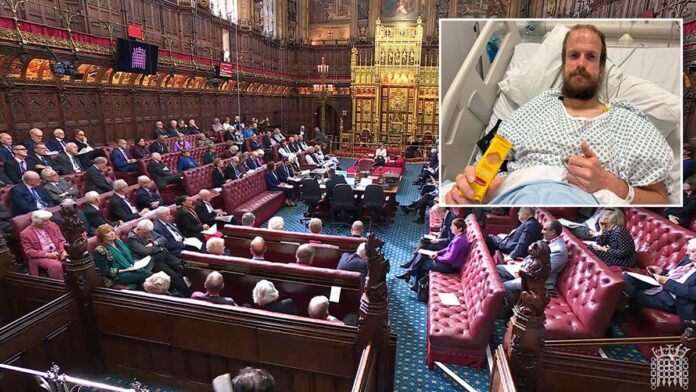
The House of Lords initiated the Committee Stage today, following the creation of nearly 1,000 amendments by its members. Accusations have been made against the House of Lords for potentially undermining the Assisted Dying bill by flooding it with an unprecedented 942 amendments.
Expressing his concerns, a terminally ill music teacher emphasized the potential devastating impact if the Terminally Ill Adults (End of Life) Bill is hindered due to political maneuvers. The teacher, who is 39 years old and has limited time left, shared his fears of experiencing excruciating pain in front of his family. He stressed the urgency of passing the bill to ensure a peaceful end for individuals facing similar situations.
Nathaniel Dye, an MBE recipient from east London, raised alarm over the urgency of the bill, citing the urgent need for a change in the law to prevent unnecessary suffering for terminally ill individuals. He highlighted the importance of timely action, expressing concerns that delays in passing the bill could have dire consequences for many families.
A group of over 100 terminally ill individuals and their families signed a letter urging Members of the House of Lords to consider their perspectives and ensure that their voices are heard and respected in the decision-making process. The group emphasized the significance of including the firsthand experiences of those directly affected by end-of-life decisions in the legislative discussions.
Jenny Carruthers, a signatory to the letter, shared her personal story and the harrowing experience of witnessing her partner’s agonizing death from liver cancer. Having been diagnosed with terminal breast cancer herself, she emphasized the urgency of passing the bill to avoid similar suffering for others in the future.
The debate in the House of Lords saw various amendments proposed by different Peers, reflecting diverse perspectives on the bill. Notably, Lord Frost’s amendment highlighted the importance of considering unbearable suffering caused by illness, while Baronesses O’Loan and Grey-Thompson focused on specific criteria related to pregnancy testing. Another amendment by Baroness Coffey aimed to restrict individuals who had left the UK in the past year from accessing the provisions of the bill.
Sarah Wootton, CEO of Dignity in Dying, emphasized the need for a thoughtful and compassionate debate in the House of Lords, centered on the real-life implications of the legislation for terminally ill individuals and their families. She urged Peers to prioritize the voices of those directly impacted by the current laws and to avoid procedural delays that could undermine the bill’s progress.
The emotional plea of Louise Shackleton, who accompanied her husband to Dignitas for end-of-life assistance due to his suffering from MND, highlighted the profound impact of delaying necessary legislative changes. She shared the heart-wrenching experience of witnessing her husband’s decision to end his suffering in Switzerland, emphasizing the urgent need for humane and compassionate change in the law.
The ongoing discussions in the House of Lords have sparked intense emotions among supporters of the bill, who view the numerous amendments as obstructive rather than constructive. The public backing for the bill and the overwhelming support from the elected Commons underscore the importance of giving due consideration to the voices of those affected by the legislation. The current tactics employed in the debate have been criticized as attempts to delay progress and disregard the urgent needs of terminally ill individuals and their families.

