
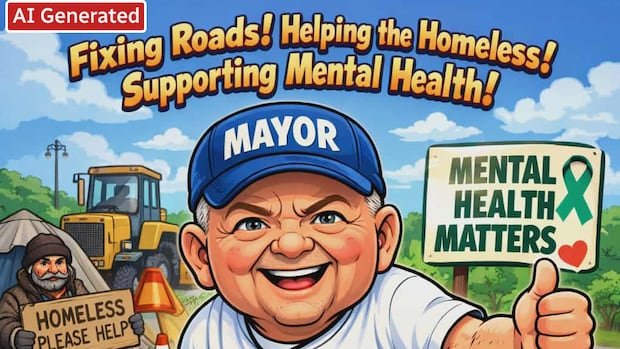
Bob Johnston, a mayoral candidate in Sudbury, Ontario, is utilizing artificial intelligence to design campaign posters, aiming to inject humor and optimism into the local community. The AI-generated images depict Johnston as a cheerful cartoon figure, featuring his prosthetic legs, engaging in various activities like filling a pothole and driving past the iconic Big Nickel.
Johnston expressed delight in the positive feedback his signs have garnered, with one individual even expressing interest in keeping one as a memento post-election. As municipal candidates in Ontario gear up for the upcoming October elections, experts note the absence of specific regulations governing the use of AI in advertising campaigns.
Andrea Lawlor, an associate professor at McMaster University specializing in political science, highlighted the potential benefits of AI for candidates, particularly in cost reduction for those lacking significant financial backing. However, she emphasized the uncharted territory in terms of governing the utilization of AI in the political sphere.
While there are no explicit regulations under the Municipal Elections Act or City of Greater Sudbury bylaws pertaining to AI in election advertising, existing requirements for political ads must still be adhered to. Scott Lemke, an election law attorney at Massey LLP in Toronto, clarified that while utilizing AI in ads is generally allowed, creating “deepfakes” with the intent to deceive the public is prohibited.
Professor Lawlor mentioned ongoing efforts towards regulating AI use, citing Bill C-25’s recent amendments to the Canada Elections Act as a step in the right direction. Despite the rejection of a bill in Ontario that would have mandated AI disclosures on provincial election ads, Lawlor stressed the growing public expectation for swift governmental action in regulating AI in politics.
Some residents in Sudbury expressed concerns about AI-generated ads, particularly regarding their impact on younger generations’ perception of truth. Despite apprehensions raised by individuals like teacher Brady Chartier, Bob Johnston remains enthusiastic about the reception of his AI campaign signs, emphasizing the novelty and positivity they bring to the community.
Lawlor underscored the need for clarity on how political candidates should navigate AI technologies in advertising, foreseeing a potentially unregulated landscape in upcoming election cycles. While she believes a total prohibition on AI is unlikely, she advocates for transparency through disclosure statements on AI-generated content. Johnston, the first to employ AI in his campaign, expressed openness to future changes while embracing the current innovative use of technology in his election materials.

