
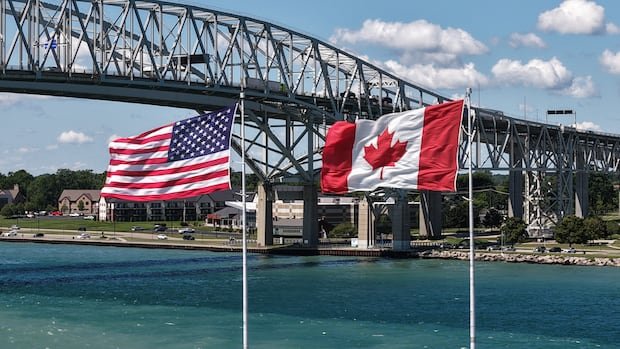
The latest move by the White House in the ongoing trade dispute between Canada and the U.S. includes a ban on Canadian dairy, motorcycles, and certain alcohol imports. Alongside this ban, additional 50% tariffs have been imposed on various products, raising concerns about the impact on the Canadian economy.
Economists have analyzed the situation and concluded that the overall effect on the Canadian economy may not be significant. Despite this, specific industries are expected to bear the brunt of the measures, causing uncertainty for business owners.
The retaliatory actions by the White House, which were in response to Canada’s counter-tariffs, involve bans and increased tariffs on items such as mattresses and paper products. These new tariffs are estimated to affect approximately $3 billion worth of Canadian goods, while the removal of tariffs applies to about $2 billion worth of goods. Considering that Canada exported over $527 billion worth of goods to the U.S. in 2025, the difference in impact is deemed marginal.
According to analysis by Derek Holt, the bans on dairy, motorcycles, and alcohol are unlikely to have a significant economic impact as these sectors contribute relatively little to Canada’s exports to the U.S. The bans are viewed as more symbolic than substantive by experts, offering some reassurance to investors.
While the trade measures may not have a major direct economic impact, uncertainties and disruptions caused by the escalating trade tensions could affect business confidence. The swift implementation of some of the new measures without much lead time adds to the challenges faced by businesses on both sides of the border.
In light of these developments, industry leaders like Cal Bricker, CEO of Spirits Canada, express concerns about the repercussions of the continued targeting of certain sectors. Despite the challenges posed by the tariffs and bans, businesses are exploring alternative strategies, such as focusing on domestic and international markets to offset potential losses in the U.S. market.
Overall, while the immediate economic effects of the trade actions may be limited, the broader implications on business confidence and market uncertainties remain a significant concern for stakeholders on both sides of the Canada-U.S. border.

