
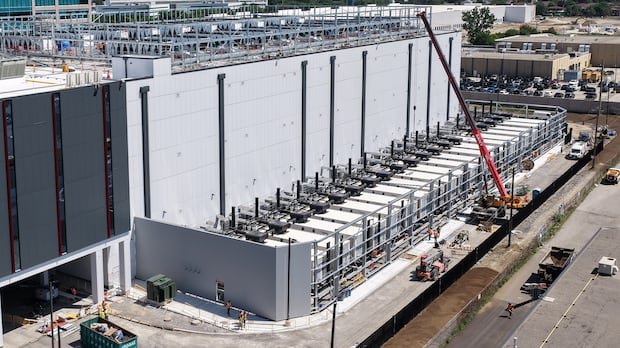
Ontario Premier Doug Ford unveiled the province’s latest data center framework on Thursday, emphasizing the importance of keeping Canadians’ data within Canada. The framework is built on three core principles: economic development, data protection and sovereignty, and community investment and public confidence.
In a statement at the announcement event in Guelph, Ford highlighted the significance of the new data center playbook in shaping the economy’s future. The framework aims to drive substantial economic growth, boost tax revenues, create numerous job opportunities, and ensure that data centers adhere to established regulations.
One key aspect of the framework is that data centers will be required to cover the entirety of their electricity usage costs. This approach aims to incentivize projects to develop their own power generation sources. Additionally, a separate rate category will be established for large new data centers, with rates set higher than existing industrial rate programs for significant electricity consumers.
Ford emphasized that the province will not provide financial incentives to attract investments. The framework is expected to play a crucial role in supporting Ontario’s artificial intelligence (AI) strategy, projecting significant economic benefits such as $122 billion in growth by 2035 and the annual creation of 17,000 new jobs.
The announcement coincides with ongoing discussions in municipalities across Ontario regarding moratoriums on data centers. Oakville recently approved a one-year moratorium, and Mississauga is set to vote on a similar measure in September.
Green Party of Ontario leader Mike Schreiner recently called for a pause on data center approvals, expressing concerns about the impact on local water resources and communities. The need for a closed-loop system in data center operations, which significantly reduces water consumption, has been highlighted.
While acknowledging the importance of data centers in the future, Schreiner emphasized the need for strong regulations to protect communities and ensure they have a say in the development of such facilities. The Green Party is advocating for a moratorium until robust safeguards are in place.
In response to concerns raised, Ontario’s Minister of Economic Development, Vic Fedeli, assured that priority would be given to data centers utilizing closed-loop systems. Ford echoed this sentiment, emphasizing the importance of prioritizing builds with environmentally friendly water systems.
The province continues to navigate the evolving landscape of data center development, with local officials in the Waterloo region seeking to understand the economic and environmental impacts of such facilities. A comprehensive report is expected to be completed early next year to inform decision-making at the regional level.

