
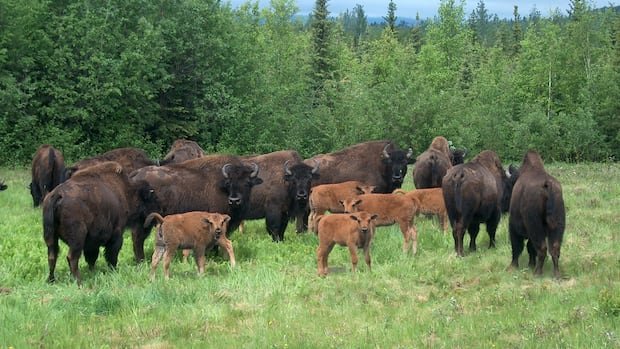
A decrease in bison road collisions is observed in the Northwest Territories (N.W.T.), with only one incident recorded so far in 2026 compared to 60 from 2021 to 2025, according to the N.W.T. Department of Environment and Climate Change (ECC).
Terry Armstrong, a Bison Ecologist at ECC, attributes this decline possibly to wildfires. Bison tend to shift their locations post-fire, being drawn to recently burned areas for the emerging vegetation. Consequently, more bison are opting for recovering wildfire zones over roadsides, resulting in fewer collisions.
Wood bison, a threatened species in both territorial and national contexts, benefit from this trend. The current wood bison population in the N.W.T. is estimated by ECC at slightly over 2,500, although Armstrong suggests the number could be higher.
ECC spokesperson Toyeke Adedipe noted that between 2021 and 2025, 76 bison fatalities occurred due to collisions, with Highway 3 witnessing the majority of incidents. Armstrong highlighted the heightened risk of encountering aggressive bison during the rutting season, especially from August to September, when mating and dominance fights lead to erratic behavior.
With reduced visibility in the darker months ahead, the likelihood of collisions increases. Armstrong emphasized the importance of driving cautiously, giving bison space, refraining from provoking them, and never attempting to interact with these massive animals.
As Armstrong underscored, bison are a vital and unique part of North America’s ecosystem, with their protection and preservation being paramount.

