
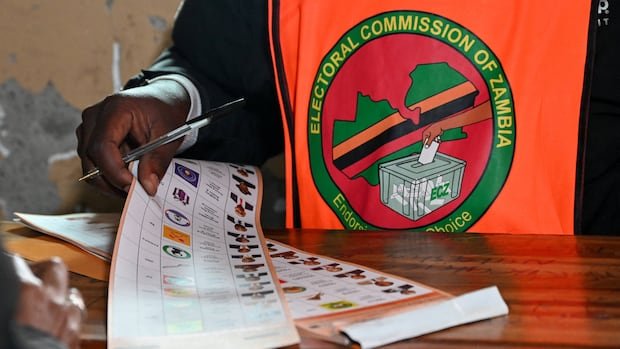
Zambia’s President Hakainde Hichilema secures a second consecutive 5-year term, facing unexpectedly robust competition from the opposition leader amid public discontent over persistent challenges despite an economic upturn. The election commission’s results, unveiled early on Tuesday, reveal Hichilema capturing around 60% of valid votes, outstripping his main rival, Brian Mundubile, who garnered 38%. Commission chairperson Mwangala Zaloumis officially declared Hichilema as the president-elect of Zambia on August 18, 2026.
This marked Hichilema’s seventh presidential bid, with the incumbent enjoying a presumed advantage, while Mundubile made his first foray into the head of state candidacy. Hichilema, aged 64, centered his campaign on his economic achievements following his assumption of office during a pandemic-induced debt crisis in 2021. Zambia, known for its copper wealth, has been a focal point in the competition between China and the United States for its strategic minerals.
Despite a relatively calm prelude to the August 13 election, tensions heightened swiftly afterwards. International observers, including the European Union, noted the generally peaceful conduct of the election but raised concerns about limitations on fundamental freedoms during the broader electoral process. The EU observation mission head, Michael McNamara, highlighted late legal modifications, legal ambiguities, and unequal campaign conditions that skewed the electoral landscape.
Post-election, a surge in tensions unfolded, with authorities detaining 11 individuals, including prominent opposition figures, in a raid that involved gunfire exchange while Mundubile was present. Subsequently, the electoral commission halted vote tallying for several hours due to reports of violence against polling personnel and the theft of ballot papers. Mundubile alleged possible result form tampering at polling stations, calling for an urgent independent probe, a claim refuted by Hichilema’s camp.
The Zambia Conference of Catholic Bishops expressed apprehension about the army’s involvement during vote tabulation, emphasizing that maintaining order during elections falls within the jurisdiction of the Zambia Police Service. The opposition is anticipated to challenge the election outcome legally, though the prospects of success are deemed slim by Greg Musiker, a Zambia analyst at advisory firm Signal Risk. Despite the potential for localized political unrest in the coming days, a broader upheaval is not foreseen.

