
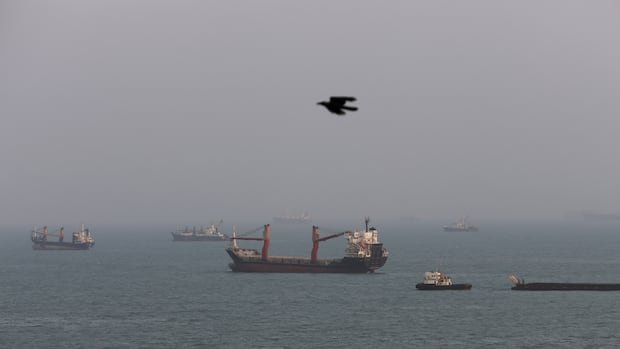
U.S. President Donald Trump stated on Tuesday that there were no ongoing discussions with Iran, and no future talks were planned. He affirmed that the Strait of Hormuz was operational, opposing previous claims by Iran that the vital water passage was closed to shipping.
The diminishing possibility of resolving the six-month conflict led to a rise in oil prices, causing stock markets to decline and borrowing costs for major economies, including the U.S., to reach multi-decade highs. This was due to concerns about long-term inflation and fiscal consequences resulting from the crisis.
Following the expiration of a temporary ceasefire agreement on Monday, a senior Iranian official mentioned that Iran was transitioning to a “fully offensive” military stance due to the diplomatic deadlock. However, there were no reports of new attacks from either side on Tuesday.
In a post on Truth Social, Trump reiterated that there were no ongoing or scheduled discussions with Iran and emphasized that the Naval Blockade was still in effect. He confirmed that the Strait of Hormuz was open for operations after the removal or detonation of all water mines.
Jared Kushner, Trump’s son-in-law and special envoy, had expressed optimism on Monday, indicating that talks with Iran were ongoing and possibly more substantial than before.
Despite Trump’s positive statements about the Gulf situation, initial shipping data confirmed that ship transits through the Strait of Hormuz were minimal on Monday. The United Kingdom Maritime Trade Operations reported an incident where a vessel was hit by an unidentified projectile while passing through the strait, resulting in engine room damage and casualties among the crew.
Iranian negotiator Mohammad Baqer Qalibaf declared that the strait would remain closed until the U.S. fulfilled the conditions of an interim deal signed in June. These conditions included lifting the blockade of Iranian ports, removing oil sanctions, releasing frozen assets, and ceasing threats and military actions on all fronts.
The agreement signed in June aimed to establish a broader deal concerning Iran’s nuclear program and U.S. sanctions within a 60-day timeframe, which expired on Monday with no extension planned by Trump. Disagreements over control of the Strait of Hormuz, a critical waterway for global oil and gas transportation, led to the unraveling of the agreement.
Both Trump and Tehran have alternated between threats and conciliatory language in their efforts to resolve the crisis triggered by U.S. and Israeli airstrikes against Iran in February. Iranian officials, including Mohammad Mokhber, emphasized that Iran was open to dialogue with the U.S. without equating negotiations with surrender, highlighting the country’s determination to defend its security, dignity, and allies while avoiding war.
As the conflict persists, Iranian leaders are concerned that increased economic sanctions could worsen hardships, reignite unrest, and undermine the legitimacy of the Islamic Republic. The conflict has resulted in numerous casualties, particularly in Iran and Lebanon, with Iran conducting military operations in various countries in the region.
Throughout the conflict, Brent crude oil futures have surged, reaching $126 per barrel, a 75% increase from pre-war levels. Gasoline prices for American consumers have risen above $4 per gallon, up from under $3 before the conflict, impacting the upcoming November congressional elections.

