
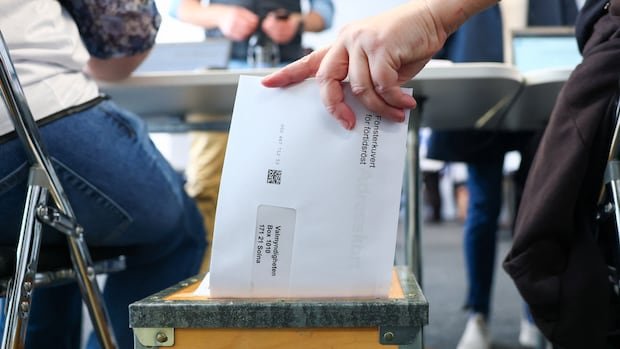
Swedish citizens participated in a tightly contested election on Sunday, with the outcome potentially leading to the involvement of a far-right party in the government for the first time or steering the country back towards its traditional liberalism. The centre-left opposition in Sweden held a slight advantage over the ruling right-wing bloc in the run-up to the parliamentary election, as per various polls this week. Despite Prime Minister Ulf Kristersson trailing in polls during his tenure, he has been narrowing the gap in the final stages of the campaign, while his opponent Magdalena Andersson and the Social Democrats have seen a decline in support.
Kristersson has promised to include the Sweden Democrats in the government if his bloc emerges victorious. Advocates of the right-wing bloc argue that their policies have been effective in reducing gang violence and significantly cutting down on immigration. They view a win as an endorsement of their approach and anticipate continuity in similar strategies in the future. In contrast, critics contend that these policies are eroding civil liberties and pressuring immigrants to conform more closely to Swedish cultural norms or face expulsion.
Voters in Sweden, a member state of the EU with a population of 10 million and recent NATO entry post the Ukraine-Russia conflict, began casting their votes at 8 a.m. local time. Exit polls were expected shortly, with result indications by around 2 p.m. ET. Individuals like Johanna Tornqvist, a 44-year-old market analyst, expressed support for the right-wing coalition, downplaying concerns about the Sweden Democrats’ potential government involvement.
However, Susanne Cherment, a 20-year-old first-time voter in Nacka, east of Stockholm, voiced unease with the rhetoric of the Sweden Democrats. The rise of the Sweden Democrats could be viewed favorably by right-wing parties across Europe, following the recent success of Germany’s anti-immigrant Alternative for Germany in state elections.
In an area called Rinkeby in northern Stockholm, residents expressed fears of worsening conditions if the election outcome favored certain parties. Concerns were raised about the targeting of Muslims and immigrants, with some highlighting the contributions made by immigrants to Swedish society. The ruling coalition, supported by the Sweden Democrats, has implemented measures such as abolishing permanent residency for refugees, tightening welfare regulations, and increasing expulsions of unauthorized individuals.
The right-wing bloc has already outlined plans to establish a four-party government under Kristersson’s leadership if successful, while the path to power for Andersson remains uncertain. The election’s outcome could hinge on whether the Liberal party surpasses the four percent threshold for parliamentary representation, bolstering the right-wing coalition that includes Moderates, Christian Democrats, and the Sweden Democrats.
As the election unfolds, the rival blocs have converged on key voter concerns such as support for Ukraine, military strengthening, and alleviating the impact of the cost-of-living crisis on households. While there is general agreement among opposition parties on the need for increased welfare and public expenditure, divisions persist on several issues, including immigration policies and other contentious topics like taxation and energy production.
The election in Sweden holds significant implications for the country’s political landscape and future policies.

