
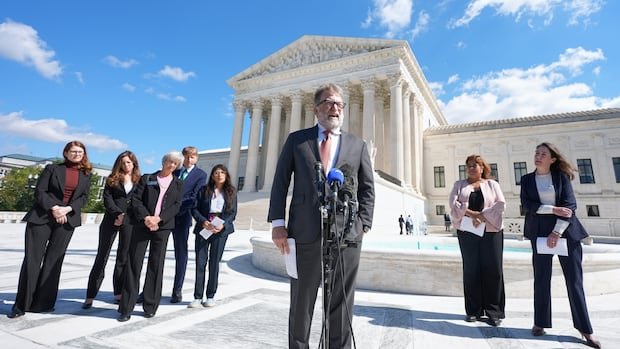
The U.S. Supreme Court deliberated on Monday regarding the ability of local governments to file lawsuits against oil and gas companies in state courts to address expenses related to climate change, a matter potentially involving substantial financial implications. Key justices expressed hesitation about the broad scope of potential legal actions while grappling with the intricate aspects of federal and state laws raised by the case.
Officials in Boulder, Colorado, contend that their legal action aims to hold Canada-based Suncor and U.S.-based ExxonMobil responsible for their roles in climate change. They argue that the escalating impact of disasters like floods and wildfires imposes significant financial burdens on local communities, and the industry should share in covering these costs.
Both the city and county of Boulder initiated lawsuits against the oil companies in 2018, predating the 2021 Marshall Fire that razed almost 1,100 residences and resulted in two fatalities, with total damages estimated at $2 billion US—the most expensive wildfire in Colorado’s history.
Energy corporations assert that an influx of lawsuits in state courts is not the appropriate approach to addressing the global issue.
The case holds implications for a wave of similar climate-related legal actions filed by governments from predominantly Democratic-leaning regions across the U.S., seeking compensation potentially amounting to billions of dollars, as part of a global trend of legal initiatives to drive action through judicial channels.
Chief Justice John Roberts raised concerns about the potential aftermath of a favorable ruling for Boulder, suggesting that it might trigger a surge of similar lawsuits nationwide. Justice Brett Kavanaugh expressed apprehensions that a victory for Boulder could financially cripple not only the oil companies but also other possible defendants.
Suncor and Exxon argue that the authority to regulate emissions lies with the federal government under the Clean Air Act, rather than with individual states. They enjoy support from the Trump administration, which deems the lawsuits as an unconstitutional effort to control emissions causing global warming and to extend Colorado’s state laws beyond its borders.
The Supreme Court’s decision, expected in the near future, could have a significant impact on the outcome of numerous similar cases filed recently.

