
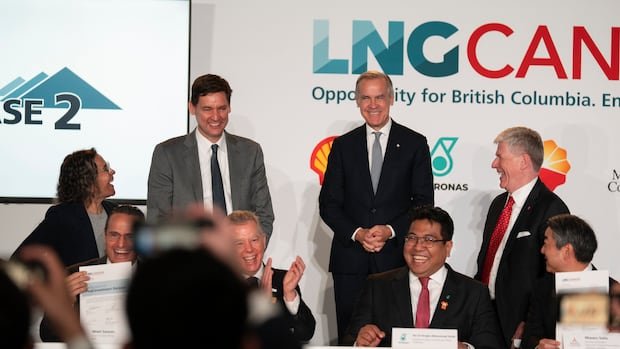
LNG Canada has confirmed the advancement of its Phase 2 expansion project in Kitimat, British Columbia, which is anticipated to potentially double the export of liquefied natural gas from the northern coastal plant to international markets. CEO Chris Cooper emphasized the significant economic impact of the project, stating that it will generate numerous employment opportunities and enhance Canada’s standing as a reliable energy partner.
The Phase 2 initiative by LNG Canada, a consortium comprising Shell, Petronas, PetroChina, Mitsubishi Corporation, and Korea Gas Corp, marks a substantial investment in the nation’s infrastructure. The company’s Kitimat facility successfully dispatched its inaugural shipment of LNG to Asian markets last year.
During an event in Vancouver, Prime Minister Mark Carney highlighted the magnitude of the private sector’s investment, amounting to approximately $33 billion, making LNG Canada’s Phase 2 expansion the world’s second-largest facility of its kind. Carney emphasized the project’s contribution to connecting sustainable Canadian energy resources with global markets, foreseeing substantial economic gains and the creation of thousands of jobs in Kitimat.
While local Indigenous leaders received praise for their longstanding efforts in developing the LNG industry, Conservative MP Ellis Ross criticized politicians for taking undue credit for the project. Despite political support for LNG expansion, concerns persist among critics regarding the environmental impact, particularly the potential escalation of greenhouse gas emissions.
LNG, derived from natural gas extracted through processes like hydraulic fracturing, is cooled to extreme temperatures before export as fuel. The expansion project is expected to double the annual production of LNG to 28 million tonnes and involves collaboration with Coastal GasLink to enhance pipeline capacity.
Environmentalists raise alarms about the environmental consequences of LNG production, including increased seismic activity and heightened emissions. As discussions intensify around climate change, the urgency to address emissions and mitigate environmental impacts is underscored. The project’s recognition as a national priority further divides opinions among political parties, with contrasting views on the pace and scale of LNG development in British Columbia.

