
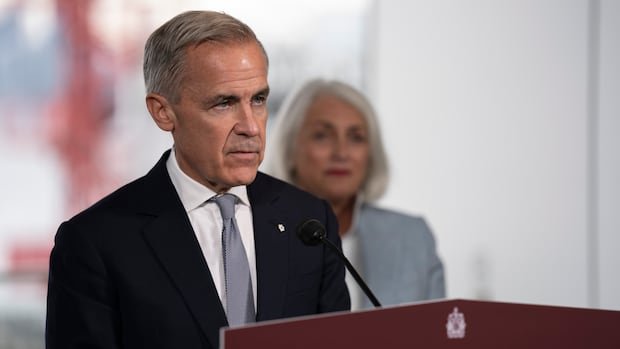
Prime Minister Mark Carney revealed a $1.2 billion federal funding initiative for ocean conservation on Tuesday, aligning with upcoming decisions on a new West Coast pipeline and the expansion of a key port in Metro Vancouver. The initiatives are anticipated to escalate maritime activity, intensifying the pressure on vital ecosystems, as per Carney.
To safeguard marine life in unforeseen circumstances, Carney emphasized the necessity to enhance existing protective measures. The allocated funds will support various strategies, including enhancing the Canadian Coast Guard’s monitoring capabilities, implementing a national near-shore weather forecasting system, and establishing a marine mammal oil spill response plan.
Moreover, the funding will facilitate improvements in search and rescue infrastructure, seabed mapping, and fisheries conservation efforts. Carney made these announcements in North Vancouver, just before the impending decision deadline on a proposed pipeline project of national interest from Alberta to British Columbia’s southern coast.
The proposed pipeline is projected to enhance economic diversification, generate approximately 150,000 new jobs nationwide, and reduce the country’s reliance on the United States. Carney highlighted the importance of a sustainable approach to infrastructure development, emphasizing the government’s commitment to protecting the environment during project execution.
Additionally, Carney assured that the pipeline route would steer clear of environmentally sensitive areas, aligning with the current Trans Mountain pipeline path. Notably, the ban on tankers along B.C.’s northern coast will remain in place, ensuring continued environmental protection.
Furthermore, with Albertans gearing up for a referendum on separation from Canada, developments like LNG Canada’s Phase 2 expansion in Kitimat, B.C., demonstrate ongoing economic growth in the region. Carney’s endorsement of the Port of Vancouver’s Roberts Bank terminal expansion underscores the government’s efforts to diversify export markets beyond the U.S.
As the Port of Vancouver experiences increased vessel traffic, Carney stressed the importance of enhancing ocean protection measures, especially for endangered marine species like southern resident killer whales. Initiatives to address underwater noise pollution affecting whales are underway, with a focus on sustaining marine biodiversity across all Canadian coasts.
The allocated funds will also support Indigenous-led stewardship in the Lower Fraser River Estuary, bolster fisheries enforcement capabilities, and advance conservation efforts in the Great Bear Sea region. The government remains committed to stringent construction conditions to ensure environmental preservation, as Carney emphasized the need to halt work if killer whales approach the proposed expansion site.
Coastal First Nations and environmental groups have welcomed the funding, acknowledging the crucial steps taken to prepare for increased vessel traffic and economic development while prioritizing environmental sustainability. However, concerns have been raised regarding the adequacy of the funding for ocean protection compared to larger infrastructure investments, with advocacy groups urging stronger species protection measures amidst economic development initiatives.

