
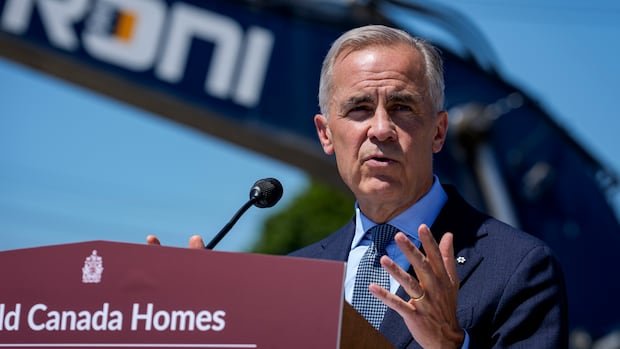
A bit over a year ago, Prime Minister Mark Carney unveiled Build Canada Homes in Ottawa amidst a backdrop of partly constructed prefab houses. This initiative, by the federal government, aims to address the housing crisis and expedite residential construction, responding to concerns raised by industry experts about the sluggish pace of housing development nationwide.
Build Canada Homes has committed to supporting the construction of approximately 19,000 affordable housing units across the country, with only around 2,000 of them currently in progress. Dave Wilkes, the president and CEO of the Building Industry and Land Development Association in Toronto, expressed the need for quicker progress in an industry where patience is measured in seconds.
The federal housing agency, which became a Crown corporation in July following the royal assent to the Build Canada Homes Act, has been navigating bureaucratic obstacles, securing land transfers, and finalizing intergovernmental agreements during the past year.
According to Build Canada Homes spokesperson Joshua Coke, the initiative is just the beginning as Canada’s housing sector faces unprecedented demand for affordable homes. The agency focuses on constructing non-market housing, where rents are income-based rather than market-driven, while also collaborating with developers to create affordable homes for the middle class.
Kevin Fettig, president of CMI Financial, highlighted a prolonged absence of federal funding and construction of affordable housing over the past three decades under both Conservative and Liberal governments. This absence led to a lack of focus on affordability and a subsequent surge in home prices and interest rates.
Federal Housing Minister Gregor Robertson acknowledged Ottawa’s historical neglect in addressing housing affordability and emphasized the current government’s commitment to change this situation. The approach of Build Canada Homes, aimed at accelerating residential projects through support to builders, developers, and community partners, is expected to yield positive outcomes over time.
The Canada Mortgage and Housing Corporation (CMHC) reported that annual housing starts have been around 250,000 in recent years, falling short of the pace needed to restore affordability levels from 2019. CMHC’s chief economist, Mathieu Laberge, indicated that 417,000 to 469,000 units must be built annually by 2036 to achieve the desired affordability goals.
Laberge emphasized the importance of addressing the supply gap to safeguard future affordability, noting the pent-up demand from younger Canadians and newcomers. Wilkes from the Building Industry and Land Development Association highlighted the positive impact of measures such as HST rebates and reduced development charges in Ontario on housing market recalibration.
Recently, Ottawa announced a partnership with the government of Alberta to construct over 1,460 affordable housing units through Build Canada Homes, aiming to meet the growing demand in the fast-growing province. The new Crown corporation also focuses on promoting modern construction methods to expedite housing projects affordably.
In conclusion, efforts are underway to modernize the housing industry and enhance construction speed and affordability, as emphasized by Federal Housing Minister Robertson.
[End of rewritten article]

