
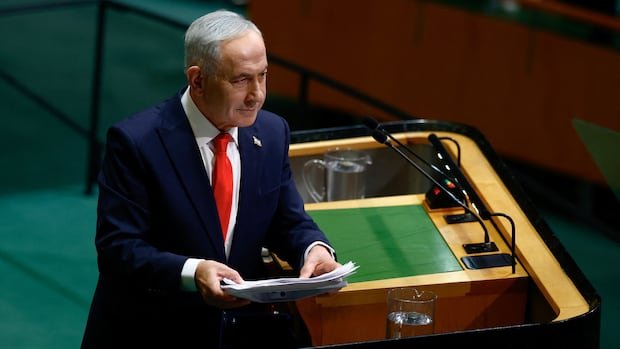
A recent analysis of Israeli Prime Minister Benjamin Netanyahu’s flight patterns over the past two years reveals a consistent trend of utilizing Canadian airspace for direct routes to the United States, despite Canada’s pledge to uphold international arrest warrants. This practice has drawn criticism for contradicting Canada’s public stance on supporting international law.
While Canada has faced scrutiny for allowing Netanyahu to fly over its territory, European nations have shown differing perspectives on enforcing arrest warrants within their sovereign airspace. France, for instance, has indicated its commitment to executing International Criminal Court (ICC) warrants against Israeli officials but has argued against obligating enforcement during overflights.
The interpretation of obligations under the Rome Statute, which established the ICC, remains a topic of debate among legal experts. While some countries like France have expressed clear stances on their obligations, others such as Italy and Greece have allowed Netanyahu’s flights without providing detailed legal justifications.
According to Ardi Imseis, co-director of Queen’s University’s international law program, Canada’s decision to permit Netanyahu’s entry into its airspace violates its obligations as a state party to the Rome Statute. Imseis emphasized that Canada’s actions contradict its responsibilities under international law.
Flight data analysis suggests that Netanyahu’s travel concerns peaked in late 2025, leading to significant deviations in flight paths to avoid certain territories. Countries like Slovenia and Turkey have explicitly closed their airspaces to Netanyahu, while Spain has seen detours by his aircraft to bypass its airspace.
In response to concerns about ICC arrest warrants issued against Netanyahu, the Canadian government has been reluctant to address its approval of these flights. Despite some statements clarifying decisions related to overflights, Canada has faced questions about its support for the ICC and commitment to upholding international law.
Legal experts have raised alarms about the implications of countries like Canada not robustly supporting the ICC, particularly in the face of challenges from governments like those led by Trump, Putin, and Netanyahu. The broader pattern of disregard for ICC authority could undermine efforts to combat impunity for serious international crimes, experts warn.

