
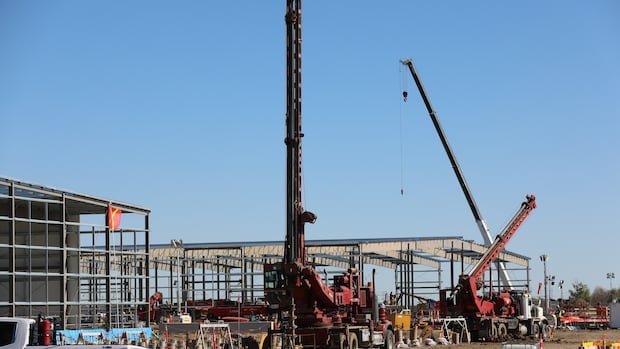
Bell Canada’s AI data center in the Rural Municipality of Sherwood is undergoing a significant expansion, as per official documents. Situated on a 160-acre plot south of Regina, the facility is swiftly being developed, with plans to activate two out of six data halls by mid-2027. The expansion project involves acquiring additional land surrounding the existing site, totaling approximately 895 acres, resulting in a total footprint of around 1,055 acres. With an estimated investment of $52 billion, this development is poised to become the most substantial private capital venture in Saskatchewan’s history.
During a special online meeting, the Rural Municipality approved the rezoning application for the project. Concerns and disruptions raised by protesters in previous council meetings prompted the special gathering. Sherwood Reeve Ray Orb confirmed the need for open consultation in upcoming meetings with the public, existing landowners, and First Nations groups. Taran Ulrich, a protest organizer, expressed frustration over the lack of opportunity to voice concerns during the recent meeting, emphasizing the need for constructive dialogue and addressing community apprehensions.
The expansion plan envisions up to nine additional data center buildings and supporting infrastructure in phases, with the first phase scheduled for completion by 2027. Bell Canada aims to add 730 megawatts of capacity through the new buildings, supplementing the existing six data halls requiring 470 megawatts. The total power demand for the campus is projected to reach 1.2 gigawatts, with SaskPower supplying 300 megawatts initially, and Bell Canada responsible for the remaining 900 megawatts through a dedicated gas-powered generation system at a separate Saskatchewan site.
Intending to link new constructions with the existing campus, an internal access road is planned, while undeveloped land will be kept for farming, allowing current landowners to continue farming under a leaseback agreement. John Watson, Bell Canada’s group president, highlighted the advantageous natural gas pipeline proximity for the generators at the new site. The expansion’s development and consultation process will involve various stakeholders to address community concerns and ensure sustainable growth.

