
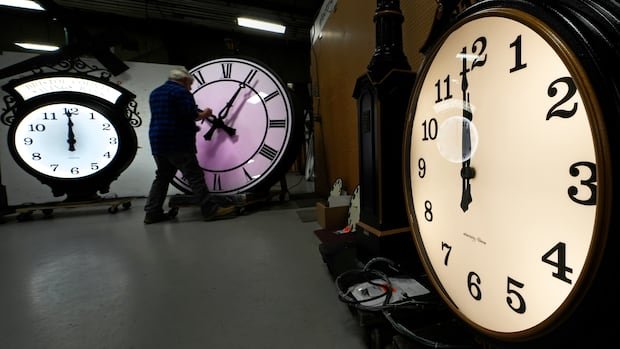
A global timekeeping organization has decided to eliminate leap seconds, allowing our clocks to gradually drift out of sync with the Earth’s rotation over the course of centuries or millennia. The use of leap seconds, introduced in 1972 to reconcile the discrepancy between atomic time and solar time due to the Earth’s slowing rotation, has posed challenges for modern technology systems reliant on precise timekeeping.
The decision to abolish leap seconds comes after 27 instances of adding leap seconds since 1972, with the most recent addition in 2016. With the Earth’s rotation actually speeding up in recent years, there is even speculation about the need for a “negative leap second” in the future, which could have significant implications for software systems.
The new approach, approved by the International Bureau of Weights and Measures, involves allowing a cumulative 3,600 extra seconds to accrue before making any adjustments, effectively delaying the issue for future generations. However, not everyone agrees with this strategy, as it poses challenges for a technology-driven economy.
Experts acknowledge that the Earth’s rotation speed can be influenced by various factors, including climate change and glacial melting, making it challenging to maintain accurate timekeeping systems. Despite the complexities involved, the decision to phase out leap seconds reflects an ongoing struggle to balance precision with the inherent imperfections of time measurement.

