
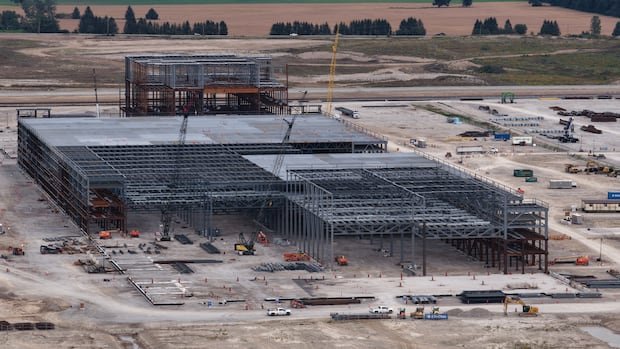
The electric vehicle industry in Canada, particularly in Ontario, Quebec, and British Columbia, has faced setbacks with major projects being delayed, cancelled, suspended, substantially changed, or even leading to bankruptcy. The Volkswagen PowerCo battery plant in St. Thomas, Ont., has pushed back its production to 2029 due to evolving market demand.
Critics are questioning whether Canada overestimated the growth rate of the EV market, expressing concerns about the sustainability of the scale of battery production investments made by governments. However, some argue that these delays are part of the long-term shift towards electrification.
Grieg Mordue, a former Toyota executive and retired McMaster University professor, highlights issues with Canada’s EV investment strategy, particularly in terms of scale and location. The St. Thomas plant’s plan to produce battery cells for one million EVs annually raised concerns about efficiency and logistics.
While some view the current slowdown in EV demand as temporary, others believe it indicates a mismatch between expectations and market reality. Despite challenges, investments in the EV sector are seen as crucial for Canada’s competitiveness in the evolving global auto industry.
The potential market for EV batteries extends beyond vehicles to grid-scale storage, emphasizing the importance of building domestic supply chains. There is recognition that the global auto sector is shifting towards electric vehicles, and Canada must adapt to remain relevant in the industry.
The article also discusses varying perspectives on the sustainability of government policies supporting EVs and batteries, with some experts cautioning against forcing a market into existence. The future of EV sales requirements and emissions standards in Canada remains a topic of ongoing debate and policy development.

