
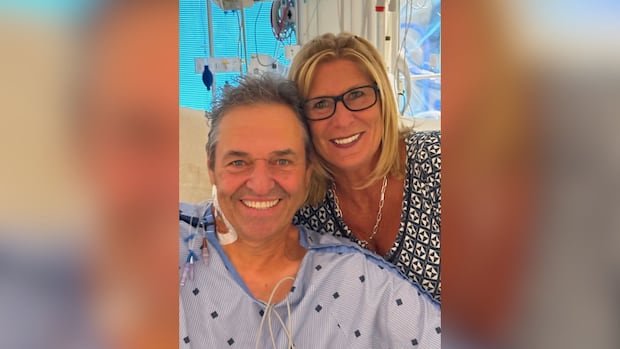
A man from Quebec, aged 64, has become the first individual in North America to undergo a liver transplant using a regenerated liver, thanks to innovative technology that has the potential to increase the availability of transplantable livers significantly. Gérard Landry, a resident of Nouvelle in Quebec’s Gaspé Peninsula, had been grappling with liver issues for around 15 years, leading to cirrhosis and liver cancer.
Prior to Landry’s surgery at Montreal’s Centre hospitalier de l’Université de Montréal (CHUM), his doctor shared surprising news – his new liver had been regenerated using a groundbreaking machine. Referred to as Liver Assist, this technology enables doctors to evaluate and treat a donated liver externally before transplantation, making it possible to utilize organs that were previously deemed too risky for transplant.
Dr. David Hénault, a liver transplant specialist at CHUM, spearheaded the project and performed Landry’s operation. The Liver Assist system functions by connecting a donated liver to a machine that circulates an oxygen-rich fluid through the organ, potentially reversing damage caused by oxygen deficiency during the period the liver is outside the body. This technology allows doctors to switch to a blood-based solution, mimicking the conditions within the human body to assess liver functionality accurately.
The introduction of Liver Assist at CHUM could significantly enhance the number of available livers for transplant. It is estimated that this technology could make an additional 20 to 24 livers viable for transplantation in its initial year of deployment, with potential for further growth as the technology becomes more widespread. The aim is to assist a larger number of patients awaiting liver transplants and reduce complications, reoperations, and hospital stays for suitable candidates.
Landry’s post-transplant progress has been remarkable, with early indications showing successful outcomes. His recovery has been smoother than expected, attributed in part to the use of the innovative technology. As Landry eagerly anticipates returning home to his family and horses in Gaspésie, he hopes his experience will raise awareness about the importance of organ donation, emphasizing that even advanced technology is futile without an adequate supply of donated organs.

