
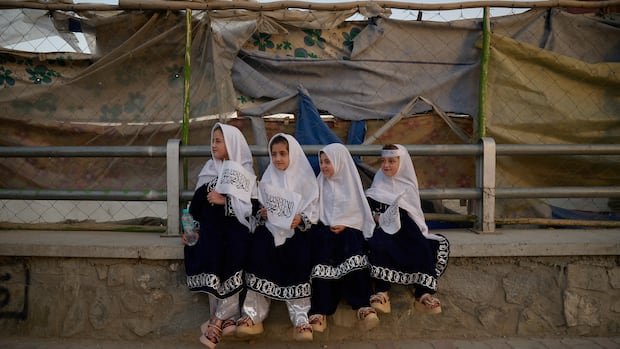
Five years have passed since the Taliban took control of Afghanistan following the collapse of the government in August 2021. During this time, Canada has provided refuge to more than 60,000 Afghan nationals.
Among those who sought sanctuary in Canada is Farkhunda Hashimy, who arrived in Saskatoon with her family in 2023. Prior to the Taliban’s rule, Hashimy, a high school student in Kabul, enjoyed the freedom to pursue education and career opportunities.
Hashimy reminisces about the pre-Taliban era, where women had the right to attend higher education institutions and engage in various professions. However, with the Taliban’s ascension to power, these rights were stripped away, leaving women and girls with limited educational prospects.
According to the United Nations, the Taliban has implemented over 100 decrees that significantly impact the daily lives of Afghan women and girls. The drastic changes include the prohibition of girls from schooling beyond Grade 6 and the exclusion of women from key governmental roles.
Natasha Arnpriester, a senior legal counsel at the Open Society Justice Initiative, is actively building a case against the Taliban for their actions, aiming to seek justice at the International Court of Justice.
Hashimy’s aspirations of attending university and pursuing sports, particularly soccer, were abruptly halted by the Taliban’s restrictive policies. The ban on women’s secondary and higher education in Afghanistan, enforced along with other stringent regulations, has severely hindered women’s access to education, employment, and healthcare.
In contrast to the previous progressive environment for women in Afghanistan, the Taliban’s regime has led to a regression in women’s rights, prompting global concern. Arnpriester attributes these regressive policies to the Taliban’s misinterpretation of Islamic law and Afghan culture.
Hashimy’s family’s decision to flee Kabul was driven by the escalating threats to their safety, particularly after her sister faced danger for questioning Islamic teachings at school. Through connections to Canada and the U.S., Hashimy’s family found refuge with the 30 Birds Foundation, a group dedicated to rescuing Afghan women and girls from the turmoil in Afghanistan.
The foundation facilitated the relocation of over 400 Afghan women and girls, including Hashimy and her family, to Saskatoon. Grateful for the opportunity, Hashimy emphasized the sense of security and gratitude she feels towards the foundation for saving their lives.
Upon arrival in Canada, Hashimy expressed relief and hope for a brighter future, highlighting the freedom to pursue her educational and career goals. She has since completed high school and is now studying urban planning at the University of Saskatchewan, eager to contribute to the development of Canadian cities.
While embracing her new life in Canada, Hashimy remains deeply connected to the struggles faced by women and girls in Afghanistan under the Taliban’s rule. She aspires to empower herself through education and growth, with the ultimate goal of supporting those still oppressed in her homeland.

