
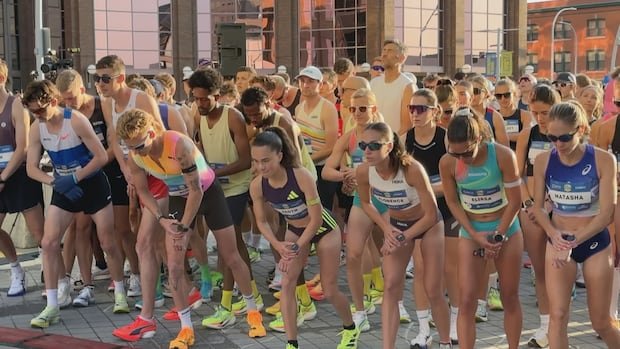
Two days post the conclusion of the Edmonton Marathon, the race director is issuing an apology following the revelation of a miscalculation in accounting for detours that resulted in the race courses being longer than anticipated.
The admission validates the suspicions held by many participants. In a statement released on Tuesday, Edmonton Marathon race director Tom Keogh disclosed that the half-marathon and marathon courses were measured 674.7 meters longer than initially believed.
Keogh expressed regret for the oversight in how the detour-related course adjustments were computed this year, acknowledging the error and extending a sincere apology. He clarified that the additional distance from the Wellington Bridge detour was not entirely offset by adjustments at the course’s west end turnaround point.
The race director emphasized ownership of the mistake, taking full responsibility and expressing gratitude for the participants who have reached out to discuss the issue further. Prior to the statement, concerns had been raised by both elite and amateur runners regarding the race distances, with some runners convinced they had run a longer distance.
Keogh, who previously asserted the courses were accurately measured and confirmed on race day, attributed the error to an unforeseen mistake despite the rigorous course measurement and certification process pursued. Athletics Canada, the sport’s governing body, had initially expressed confidence in the course measurement process but had not issued a statement regarding the updated stance of the Edmonton Marathon.
Efforts are underway to address the impact on this year’s results, particularly for runners aiming to qualify for prestigious events like the Boston Marathon. One such runner, Mitch Walz from Calgary, had trained extensively for the Edmonton Marathon with hopes of meeting the Boston qualifying standard.
Despite achieving a time within the qualifying standard, Walz found his chip time at the finish line to be longer than expected, leading to disappointment and emotional distress. He expressed pride in his performance but lamented not being able to give his best effort in the final kilometers.
Keogh assured that steps would be taken to prevent such errors in the future, pledging a review of certification processes with partners to avoid a recurrence.

