
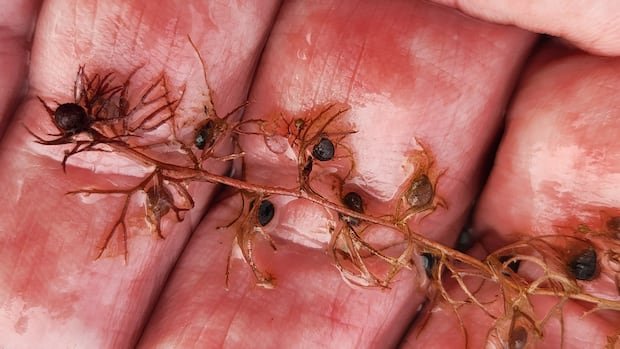
An avid plant enthusiast named Klaus Koehler made a unique discovery while exploring Sylvia Grinnell Territorial Park near Iqaluit in July. He stumbled upon a seldom-seen species in the Arctic region, known as bladderwort, hinting at potential implications for the spread of invasive plants in Northern areas as temperatures rise.
Bladderwort, a carnivorous plant adorned with tiny black bladders containing partially digested flies, is typically found in more temperate climates and rarely ventures into tundra territories. The last documented instance of bladderwort in the region dates back to 2012 when researchers located samples near Kimmirut, approximately 120 kilometers southwest of Iqaluit.
Koehler’s find suggests a shift in the Arctic ecosystem possibly due to changing climatic conditions. With warming temperatures, previously unsuitable habitats are becoming more favorable for plant species not traditionally native to the area, potentially altering the landscape and biodiversity.
The introduction of non-native species, facilitated by factors such as bird migration, shipping activities, and human traffic, raises concerns among experts like Paul Sokoloff from Ottawa’s Museum of Nature. While Koehler’s discovery may not pose an immediate threat, the influx of invasive species could disrupt the delicate balance of Arctic flora and fauna.
The study by scientists from the Norwegian University of Science and Technology highlights the risk of over 2,500 plant species encroaching on Arctic ecosystems, posing a threat to indigenous plants. Sokoloff emphasizes the need to monitor and understand the impact of climate change on plant migration patterns to safeguard the Arctic environment.
To gain deeper insights into the bladderwort’s presence in Iqaluit, Koehler plans to send a sample to the Museum of Nature for further analysis, aiding researchers in comprehending the plant’s northward expansion.

