
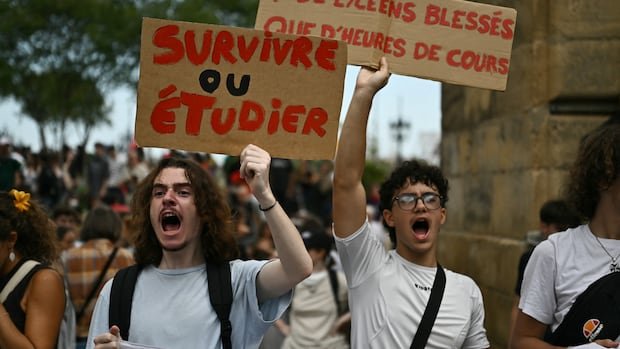

Student-led protests have ignited a crisis in France, demanding improved learning conditions and action from the government to tackle a longstanding staff shortage. The movement kicked off at a high school in the Paris region in mid-September and swiftly escalated nationwide. On Tuesday, over 250,000 individuals participated in the demonstrations, with 56,000 in Paris alone, marking the largest turnout to date according to the Interior Ministry (organizers cite a figure of 450,000).
The protests have resulted in significant disruptions in schools, along with arrests and instances of violence. Law enforcement has resorted to using tear gas and other riot-control measures against predominantly teenage demonstrators, sparking the involvement of parents and teachers in the protests.
These events present a challenge for President Emmanuel Macron as his tenure nears its end. Prime Minister Sébastien Lecornu assured the nation of forthcoming reforms during an address on Wednesday night, with plans to introduce new measures by the month’s end. A platform for students to voice concerns, launched on Tuesday, has already gathered around 40,000 submissions.
Here is an overview of the ongoing protests and their widespread impact.
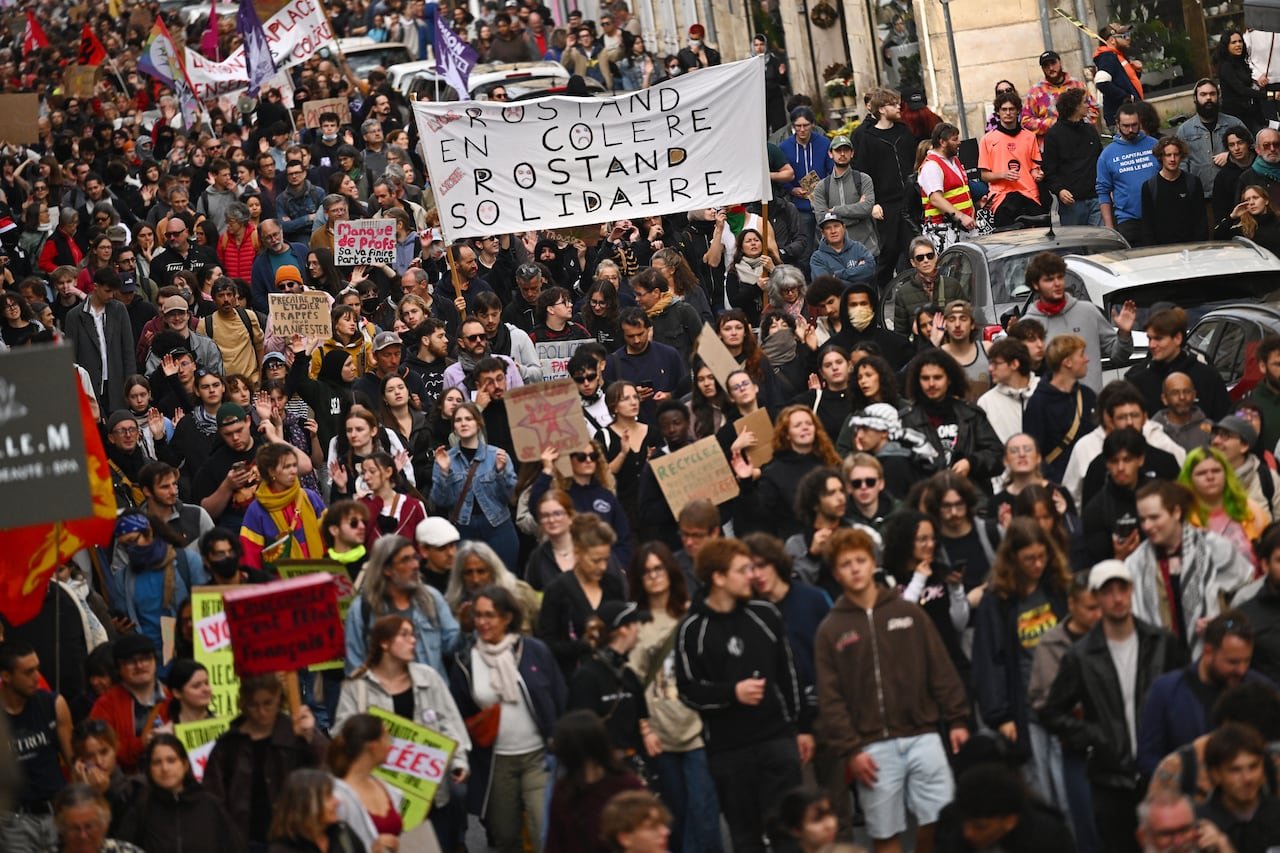
Protesters display a banner reading ‘Rostand angry, Rostand supportive’ during a demonstration in Caen, France, on Oct. 6. (Guillaume Saligot/AFP/Getty Images)
What is the reason behind the protests?
Many high school students are dissatisfied with the substandard learning environment, citing issues such as deteriorating infrastructure and inadequate staff. A survey conducted by a secondary school teachers’ union reveals that over half of all schools are understaffed this year.
The staffing shortage has plagued public education in France for nearly ten years, resulting in the failure to replace absent teachers or hire substitutes, leading to significant gaps in instruction time for students.
-
Analysis
India’s Cockroach Party shows frustrated Gen-Zers are hard to crush
-
Anti-government protesters clash with riot police in Mexico City during Gen Z-led rally
Furthermore, students are frustrated with overcrowded classrooms, now averaging between 25 to 30 students per class.
Students also highlight issues like decrepit buildings, pest infestations
