
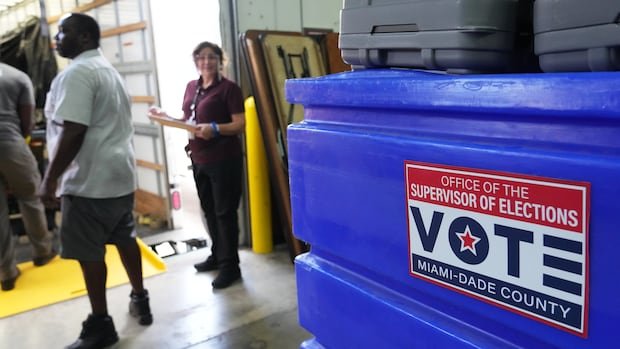
The recent preliminary approval by the U.S. Supreme Court of President Donald Trump’s mail-in voting restrictions has cast doubt on the voting method utilized by nearly a third of the country. Despite the possibility that this approval may not result in immediate procedural changes for the upcoming November midterms, it has stirred uncertainty within the electoral process.
In an unsigned order on Monday, the majority of the high court acknowledged that the constitutionality of Trump’s order remains undecided, but emphasized that the states challenging it lacked the legal standing to do so. Justice Ketanji Brown Jackson dissented, cautioning that the decision introduces unnecessary chaos and ambiguity into the upcoming midterms.
Trump’s executive order, issued in March, directs his administration to compile lists of eligible voters and mandates the U.S. Postal Service to distribute mail-in ballots solely to individuals on those lists. Although a second injunction preventing the postal service from implementing changes to comply with the order is still in place, the administration has filed a motion seeking the removal of this hold. Additionally, new regulations have been published that would come into effect once all legal hurdles are cleared, requiring specific envelope formatting for mail-in ballots and the use of an electronic system by states to identify voters opting for mail-in ballots. Failure to adhere to these rules would result in the non-delivery of mail ballots by the postal service.
The management of U.S. elections lies in the hands of local officials scattered across thousands of offices, many of which operate without full-time staff. Tammy Patrick, the chief program officer at the Elections Center, an association representing 2,500 election officials, expressed skepticism about any state’s ability to comply with the new regulations, stating that no state has attempted such procedures before.
Earlier this year, the Trump administration dismantled the Federal Election Assistance Commission, a bipartisan entity that aids election officials nationwide and oversees the national mail voter registration form. The commission found that 29% of Americans voted by mail in the 2024 midterms.
Jesse Salinas, the registrar of Yolo County in California, and president of the state’s association of election officers, highlighted the imminent ballot distribution in his state and the county’s readiness, emphasizing the impracticality of last-minute revisions to election procedures.
Despite previous setbacks, including court rulings and legislative obstacles, the Trump administration continues its efforts to alter voting practices. Trump’s criticism of mail-in voting, a method favored by Democrats, has intensified partisan divides in the electoral process. While instances of individual voter fraud exist, claims of widespread fraud to support Trump’s allegations of election interference remain unsubstantiated.
As the election landscape evolves, the implications of legal battles and policy changes on the democratic process remain a topic of intense debate and scrutiny.

