
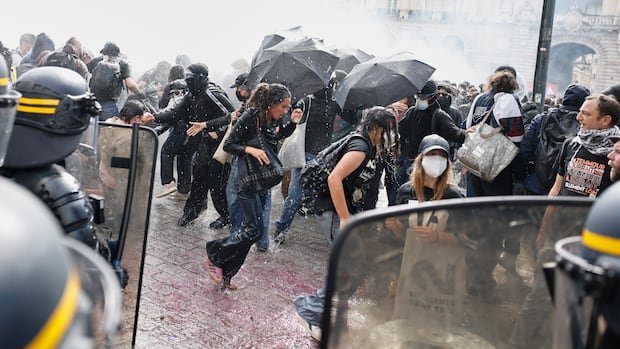
Police used tear gas and water cannons to disperse demonstrators blockading French high schools on Tuesday. The protests, led by students, teachers, and parents, marked the peak of a series of rallies against the inadequate conditions of classrooms across the country.
While gatherings in Marseille and Nantes remained peaceful with signs denouncing the state’s impact on national education, demonstrations in Strasbourg, Lyon, and Rennes escalated into violence. Clashes saw police deploying tear gas, and protesters setting fires and throwing objects.
French Prime Minister Sebastien Lecornu reported that over 200 teenagers and 85 school staff sustained injuries during the clashes, making it the most severe toll on the education system in decades. President Emmanuel Macron called for an emergency meeting in response to the unrest.
The protests, which started in Paris suburbs in September and spread nationwide, have become a significant challenge for Macron’s government amid economic difficulties. The High School Students Union revealed that more than half of France’s high schools were either blockaded or closed for the day.
Demands for increased funding to renovate high schools and address various issues like water leaks and rat infestations were voiced by protesters. The government’s deployment of riot police in response to the demonstrations has drawn criticism from rights groups, students, and parents.
As tensions persist, concerns over the government’s ability to implement educational reforms due to financial constraints have emerged. France’s budget deficit and escalating debt have put pressure on the government to rein in spending, as bond yields hit record highs.
The protests have also influenced the political landscape, with Marine Le Pen proposing austerity measures to tackle public spending if elected. France’s education spending, which has failed to keep pace with inflation, has resulted in students lagging behind their peers in academic performance, according to data from the 2025 PISA assessment.

