
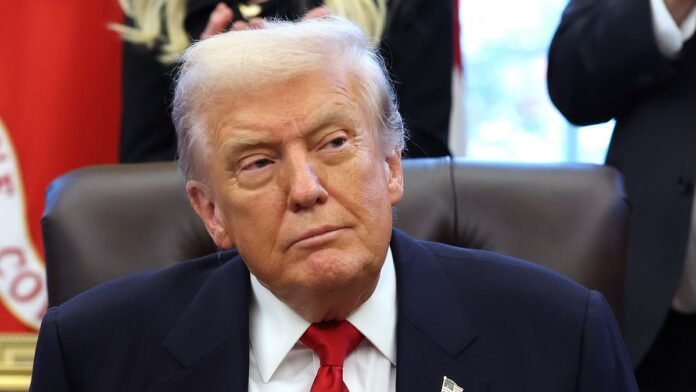
Millions of savers and employees in the UK are anxiously monitoring developments in the coming days. The recent trade tariff threats by Donald Trump pose a significant risk to the global economy and the delicate job market. Past instances of tariffs imposed by the President had widespread repercussions worldwide.
Despite efforts by Labour PM Keir Starmer to secure concessions, UK businesses exporting to the US are still facing challenges due to increased costs for buyers. The introduction of additional taxes exacerbates the situation, creating more uncertainty for companies already adapting to a new business environment. This could potentially force companies to make tough decisions such as cost-cutting measures, potentially leading to job cuts.
The impact of these developments on various companies remains uncertain, with certain sectors, like UK car manufacturers, particularly vulnerable. Premium brands such as Jaguar Land Rover and Rolls Royce may see their products becoming more expensive for US consumers. For example, JLR, still recovering from a cyber attack last year, can ill-afford new import taxes.
Trump’s tactic of using tariff threats to assert dominance, such as the recent claim over Greenland, adds to the confusion and concern among NATO allies. This has caused fluctuations in stock markets as investors assess the seriousness of the situation. While the FTSE 100 index initially dipped, it performed better compared to European markets, impacting workers whose pensions are linked to equities.
Although the FTSE started the year at record levels, any decline needs to be contextualized. The focus now lies on how this crisis unfolds, a task made challenging by the unpredictable nature of Trump’s decisions. The prevailing uncertainty is likely to dampen spending by both businesses and consumers, affecting economic stability.
In the midst of this uncertainty, the fragility of the economy, job market, and consumer confidence in 2026 is a key concern. Fragility underscores the need for caution, as any disruption can have significant repercussions.

