
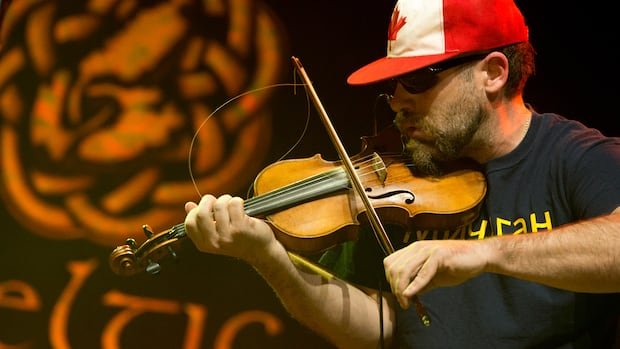
Juno Award-winning artist Ashley MacIsaac has resolved his lawsuit against Google related to an AI summary wrongly identifying him as a sex offender. Initially filing a civil suit with the Ontario Superior Court of Justice earlier this year, MacIsaac sought $1.5 million in damages after discovering the AI-generated overview on Google’s search page falsely claiming he had committed various criminal acts, including sexual assault and attempting to assault a minor, and that he was on the national sex offender registry, all of which was untrue.
In the lawsuit, MacIsaac emphasized that Google should not evade liability for the defamatory statements simply because they were generated by Google’s software. However, on July 29, a notice of discontinuance was submitted to halt the legal action without MacIsaac providing a reason for this decision.
Google did not provide a response to CBC News regarding the lawsuit discontinuance. The company had previously stated that its AI summaries are regularly updated to offer the most useful information and that any errors are utilized to enhance the system.
The introduction of AI summaries by Google in 2024 has sparked controversy, leading to legal challenges from companies and publishers who assert that the feature diminishes traffic to their websites. MacIsaac’s experience with the AI error causing a concert cancellation highlighted the potential repercussions of false information generated by AI technology.
The responsibility for damages resulting from AI-generated false information has become a pressing issue for tech companies, as evidenced by a recent court ruling in Munich holding Google liable for misleading AI summaries. Canadian courts have yet to address the issue of liability for defamation stemming from AI statements, but legal experts anticipate a forthcoming legal debate on this matter.
OpenAI, the developer of ChatGPT, has acknowledged the challenge of preventing AI from generating false information, as the models are designed to produce statistically probable responses without distinguishing between true and false information.

