
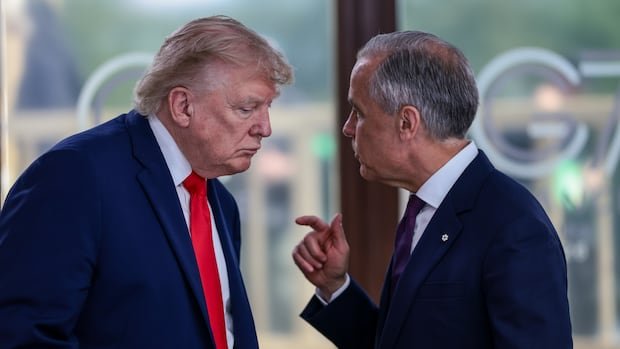
Prime Minister Mark Carney engaged in discussions with U.S. President Donald Trump over the phone on Tuesday to negotiate a resolution and prevent new tariffs on approximately $30 billion worth of Canadian goods scheduled to come into effect shortly after midnight. A spokesperson for Carney indicated that the leaders discussed the “ongoing negotiations,” hinting that talks are still in progress. This marks the second conversation between the two leaders within two days.
Sources close to the discussions revealed that the talks are challenging, and both sides have not reached an agreement yet. Canadian and U.S. negotiators have met multiple times over the past three weeks to address trade issues and provide relief to Canadian industries affected by the punitive tariffs imposed by the Trump administration.
Following the call between Carney and Trump, Canada’s Trade Minister, Dominic LeBlanc, held discussions with U.S. Trade Representative Jamieson Greer and Commerce Secretary Howard Lutnick to bridge the gap in their negotiation positions. The talks specifically revolve around the tariffs on Canadian automobiles heading to the U.S.
There are ongoing disagreements between Canada and the U.S., particularly concerning the potential tariffs on Canadian autos and other trade matters. If an agreement is not reached, various Canadian industries will face higher tariffs on their exports to the U.S. Canada is preparing a response in case the tariffs are imposed, which may include additional retaliatory measures.
The negotiations focus on the concessions each country is willing to make. Canada is pushing for the removal of new Section 338 tariffs and a reduction in existing Section 232 tariffs on industrial products. Concerns remain about the impact of tariffs on Canadian businesses and jobs, with pressures from different sectors influencing the negotiation outcomes.
Despite the challenges, there is a push to normalize trade relations between Canada and the U.S. Various stakeholders are emphasizing the importance of reaching a deal to avoid further economic harm and disruptions to supply chains. The negotiations continue as the deadline approaches, with hopes for a mutually beneficial agreement.

