
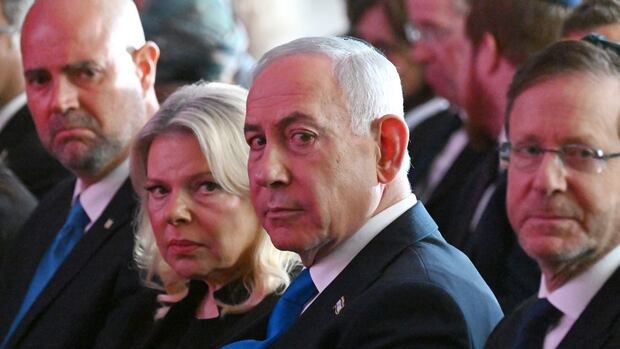
Israeli Prime Minister Benjamin Netanyahu is under scrutiny as he faces an upcoming election amidst allegations that he disregarded warnings from Arab allies that could have prevented the deadly Hamas-led attacks on October 7, 2023.
According to a new book excerpt published in Israel’s Haaretz newspaper, journalists Shlomi Eldar and Ruth Yuval claim that United Arab Emirates President Mohamed bin Zayed personally contacted Netanyahu ten days before the attacks to alert him about a potential significant move by Hamas. Eldar emphasized that Netanyahu failed to relay this warning to key security officials, including the chief of staff, the head of the Shin Bet, the head of the Mossad, and the defense minister.
The October 7 attacks resulted in the loss of over 1,200 lives, including more than 800 civilians, with 251 individuals taken as hostages back into Gaza. Subsequently, Israel’s military campaign in Gaza has led to the deaths of more than 74,000 people, as reported by Gaza’s Health Ministry.
The warning from the U.A.E. did not specify a precise date but indicated that Hamas’s leader in Gaza, Yahiya Sinwar, was planning a significant action, as per Eldar’s sources. Following the publication of these claims, other media outlets such as the Wall Street Journal and The Atlantic revealed that Egypt’s intelligence head, Abbas Kamel, also provided similar alerts in the days leading up to October 7.
In response to the allegations, Netanyahu has dismissed them as fabrications orchestrated by political adversaries and regional elements aiming to undermine his election prospects. He denied receiving any warnings and attributed the accusations to false propaganda from certain countries.
The U.A.E. has neither confirmed nor denied the claims made in Eldar’s and Yuval’s book titled “Hostages: 843 Days of Abandonment.” The controversy has reignited calls from Israeli citizens for a state commission of inquiry to investigate security lapses that have persisted for three years.
Amidst this, memorial ceremonies honoring the victims of the October 7 attacks were accompanied by protests in major cities, demanding accountability from Netanyahu. The bereaved families and victims, including Eyal Eshel, have been advocating for a thorough investigation into the events leading up to the tragic incidents.
Analysts speculate that Netanyahu’s potential disregard for warnings could be linked to diplomatic efforts in Gaza or his strategic support of Hamas to weaken the Palestinian Authority. The refusal to convene an independent state inquiry has raised questions about Netanyahu’s accountability and leadership.
As the election approaches, the Israeli public’s sentiment regarding the handling of the October 7 attacks is expected to influence their voting decisions significantly. Despite the controversies surrounding Netanyahu, political analysts suggest that his enduring political strength may not be easily undermined.
Eldar underscored the importance of the election as a referendum on Netanyahu’s actions surrounding the October 7 events, emphasizing missed opportunities to prevent bloodshed and conflict in Gaza. Netanyahu’s threat of legal action against journalists reporting on the allegations has further fueled the debate surrounding his accountability and transparency.

